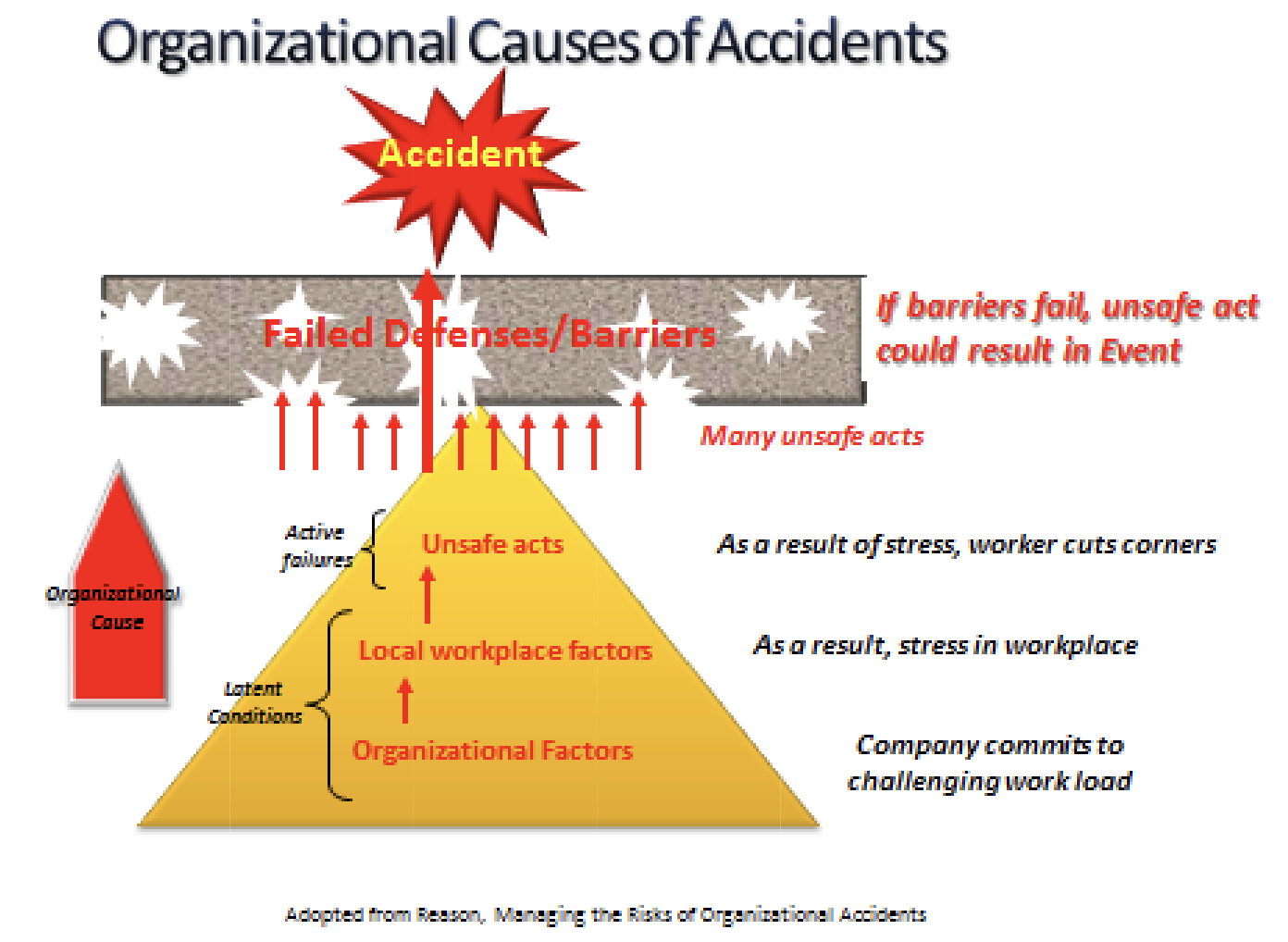
Post-accident remedies for “human error” are usually predicated on obstructing activities that can “cause” accidents. These end-of-the-chain measures do little to reduce the likelihood of further accidents. In fact, the likelihood of an identical accident is already extraordinarily low because the pattern of latent failures changes constantly. Instead of increasing safety, post-accident remedies usually increase the coupling and complexity of the system. This increases the potential number of latent failures and also makes the detection and blocking of accident trajectories more difficult.
Source: How Complex Systems Fail, Richard I. Cook, MD, Cognitive Technologies Laboratory, University of Chicago