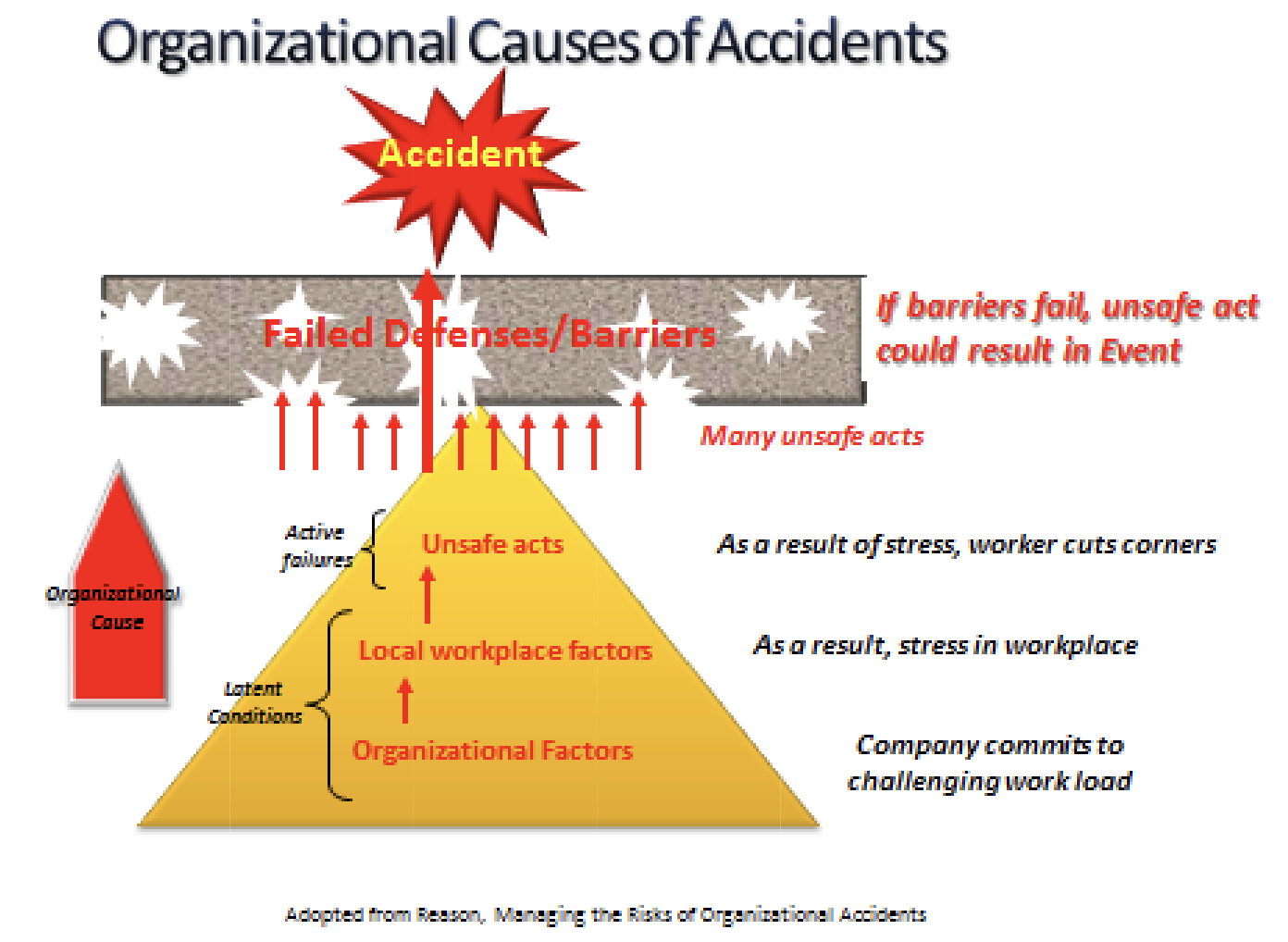
A wholly just culture is almost certainly an unattainable ideal. However, an organization in which most of its members believe that justice will usually be dispensed is within the bounds of possibility. Two (2) things are clear at the outset.
First, it would be quite unacceptable to punish all errors and unsafe acts regardless of their origins and circumstances.
Second, it would be equally unacceptable to give blanket immunity from sanctions to all actions that could or did, contribute to organizational accidents.
While this book has strongly emphasized the situational and systemic factors leading to the catastrophic breakdown of hazardous technologies, it would be naive not to recognize that, on some relatively rare occasions, accidents can happen as the result of the unreasonably reckless, negligent, or even malevolent behavior of particular individuals.
The difficulty lies in discriminating between these few truly “bad behaviors” and the vast majority of unsafe acts to which the attribution of blame is neither appropriate nor useful. A prerequisite for engineering a just culture is an agreed set of principles for drawing the line between acceptable and unacceptable actions. To this end, we will start by outlining some of the psychological and legal issues that must be taken into account when making this judgment.
All human actions involve three core elements:
- An intention that specifies an immediate goal and-where these goal-related actions are not wholly automatic or habitual-the behavior necessary to achieve it.
- The actions triggered by this intention-which may or may not conform to the action plan.
- The consequences of these actions-which may or may not achieve the desired objective. The actions can be either successful or unsuccessful in this respect.
Source: Managing the risks of organizational accidents by James Reason, 1997