







Respondent is the owner and operator of a pork manufacturing and supply business. As reported in the Respondent’s risk management plan, anhydrous ammonia, Chemical Abstract Service (“CAS”) Number 7664-41-7, is used at the Facility to cool and freeze its pork products. The Facility’s freezing and cooling system holds 201,852 pounds of anhydrous ammonia. On August 13, 2023, Respondent reported the release...
Read More
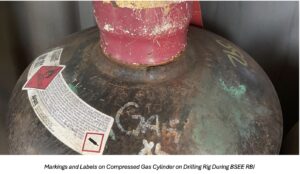
The Bureau of Safety and Environmental Enforcement’s Gulf of America Region identified a potential risk involving compressed gas cylinders across the Outer Continental Shelf in 2024 and 2025. During this period, multiple explosions were reported to the bureau and were linked to cylinder failures. Several of the explosions were severe, causing injuries and damage to facilities.
In response, the...
Read More
NOTE: OSHA would allow the “minor servicing exception” in this scenario, although the UK HSE does not.
A tissue manufacturing company has been fined after an employee, 24, was seriously injured while clearing a machine blockage at its factory.
During the manufacturing process, a tissue blockage occurred in the rollers of the machine, and the worker instructed his colleague to ‘jog’...
Read More
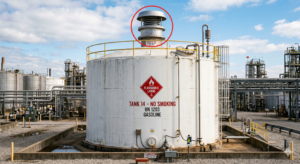
With this week’s event in Japan, where the roofs of the flammable liquid storage tanks were blown off, I shared OSHA’s “emergency venting” requirements to explain why the roofs were off the tanks, which sparked a lot of sidebar discussions. Sizing these emergency venting options is quite easy, as I explain in this article with the help of Super Grok. Although I was disappointed...
Read More
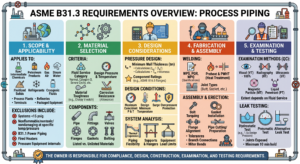
Generated with Gemini Plus
Read More
As I say each year, the International Fire Code (IFC) is being used in 42 states, D.C., Guam, and Puerto Rico. This code, dating all the way back to 1993 when I began my career in chemical processing, has always required much of what we apply in OSHA PSM/EPA RMP to processes that operate FAR UNDER the PSM/RMP TQs. For example, any hazardous material that poses a physical or toxic hazard falls under...
Read More
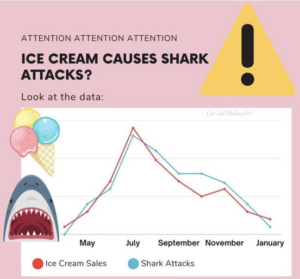
My friend and one hell of a fine process safety guru in NH3 refrigeration, Brian Chapin, is always sharing this stuff with me. This is another great example of how correlation ≠ does not cause causation. Of course, this is the extreme, but I will bet many of us have seen correlation turn into causation in our accident investigations. These little reminders from Brian will keep you grounded and...
Read More
Chemical Process Safety (PSM/RMP)
Combustible Dusts
Flammable Liquids
Hazardous Materials
OSHA Compliance
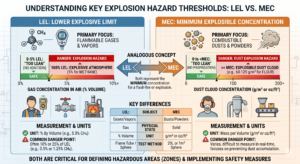
Yes, both terms essentially mean the same thing, but they refer to very different hazardous atmospheres. LEL, or Lower Explosive Limit, applies to gases and Vapors. MEC, which is Minimum Explosive Concentration, deals with Combustible Dusts. Here are some other differences:
…
HomeRead More »
Read More
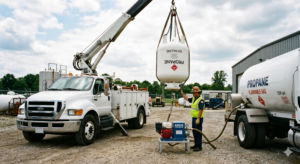
I used AI, specifically Gemini Plus and Super Grok, to create this image from an OSHA Case File, and I was impressed. Now the image is going to be shocking, but this is a very good depiction of what was described in the case file. And I’ll bet a burger and a beer that this was not the first time this stunt had been pulled off. Unfortunately, this stunt claimed the life of one (1) worker, 45,...
Read More
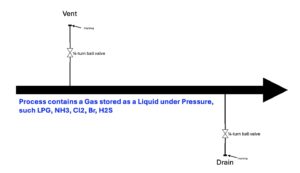
I was recently involved with an organization that had an issue with overpressuring a 330-gallon plastic tote during their evacuation of their HHC/EHS for process work. So we had a nice discussion about the DIFFERENCE between “draining” and “venting”. The chemical in question is normally a “gas” but is stored as a liquid under pressure. It has a very low boiling point...
Read More
Most people recognize Ethanol and Methanol as flammable liquids, and many of those people fail to recognize the large difference in the TOXICITY HAZARDS between these two (2) alcohols. As I wrote about during the COVID pandemic, these differences led to 28 fatalities linked to hand sanitizer made with Methanol vs. Ethanol. Those who may be familiar with adult alcoholic beverages may remember the...
Read More
This is a response to a client regarding their question… do we need to use non-sparking tools in our flammable and combustible dust areas? This is a GREAT practice, but many people may be surprised that OSHA has to use its GDC to cite this requirement, as it is NOT an OSHA/NFPA/IFC requirement. Of course, we need to control ignition sources in our flammable and combustible dust areas, but when...
Read More