











We see this practice all across this great nation as we travel for our work. At most of the plants we visit, backing in is required. Recently, some HOAs took issue with homeowners backing into their driveways. Now I can not find the full story behind this issue with these HOA’s, but these viral videos drove me to as AI… Is backing into a parking space safer? And to provide the evidence....
Read More
The concept of the weak seam welded roof—officially referred to in modern engineering standards as a frangible roof joint—has been a foundational safety mechanism for atmospheric storage tanks for over 90 years.
NOTE: In 2015, NFPA 30 Section 22.7 was amended to eliminate the use of a weak roof-to-shell seam as an allowed means of emergency venting for ANSI/UL 142 steel aboveground storage tanks....
Read More
Back in 2021 – 2023, I spent time with some Class 1 Railroads attempting to help them develop and implement an SMS. During this time, I was impressed by the FRA’s Risk Reduction Plan (RRP), which required certain railroads to develop a written RRP and submit it for “FRA approval”. This was a massive step in the right direction for railroads; consider the RRP as a miniature...
Read More
In a recent case study, NIOSH researchers purchased hundreds of respirator components from major online marketplaces to test their performance, focusing on listings bearing “NIOSH” or “P100” markings from non-authorized sellers. The results show a severe influx of fraudulent PPE:
…
HomeRead More »
Read More
Based on recent updates from USCG and NFPA, we now know that two days after the incident, a marine chemist arrived on the scene in Alaska and tested the atmosphere of the barge involved in the accident. But the atmosphere therein had been sufficiently ventilated to allow firefighters to enter and recover the body of the worker. So, in an effort to determine the condition of the atmosphere of the port-side...
Read More
As most of you know, PRCS Entry is one of the specific SWPs called out in the PSM and RMP standards. But many programs fail to meet 1910.146(f)(4), and a recent CSB accident report tied the requirement for canceling a permit to a catastrophic explosion event.
1910.119(f)(4) The employer shall develop and implement safe work practices to provide for the control of hazards during operations such as...
Read More
OSHA’s regional emphasis programs continue to prioritize the programmatic elements of 1910.134. Citations in 2026 are frequently tied to “paperwork and protocol” failures rather than hardware failures:
…
HomeRead More »
Read More
The most significant friction point involves PHMSA and SCBA Fully Wrapped Carbon-Fiber Reinforced (CFFC) aluminum-lined cylinders on Special Permit 16320 and the use of Modal Acoustic Emission (MAE) testing to extend the life of composite cylinders. Fully Wrapped Carbon-Fiber Reinforced (CFFC) aluminum-lined cylinders have a 15-year service life. PHMSA has investigated and granted limited special...
Read More
NTSB’s historical investigations into major gas and hazardous liquid pipeline ruptures continue to shape current rulemaking tracking. PHMSA has been actively reviewing the established Potential Impact Radius (PIR) calculation methodologies used in integrity management programs. The review aims to determine whether current mathematical models accurately account for human response data, rapid-ignition...
Read More
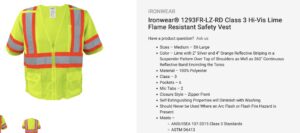
In today’s workplaces, it’s hard to find a large business that does not require Hi-Vis Vest/Workwear. What is not hard to find is a business with HAZLOCs where workers are required to wear FRC but are wearing nylon Hi-Vis vests OVER their FRC. I am all for making workers more visible to powered industrial trucks and other mobile equipment. But when those vests compromise other PPE, we...
Read More
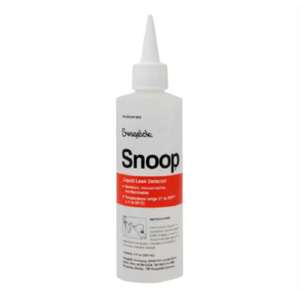
I took these pics for those who may have never seen a FAILED leak test using a “bubble solution”. We have discussed the “sensitivity testing” using the bubble test method many times, as it’s the most common method. I have been using the brand SNOOP my entire career and highly recommend it. (an unpaid endorsement)
…
HomeRead More »
Read More
Chemical Process Safety (PSM/RMP)
Free
Hazardous Materials
Hotwork/Welding Incident Alerts
OSHA Compliance
We have another tragic example of how dangerous hot work is on used (even new) containers when proper precautions are not taken. This event seriously injured the three (3) workers in Ankara, Turkey, in February 2024.
Members can download the video from the video library.
…
HomeRead More »
Read More