








Back in February of this year, I posted an article on how badly broken our “Industrial Zoning” process is broken in the USA. The article was titled: “FAILURES of true “facility siting” – our “zoning” process is broken and dangerous!” and it was about a chemical plant’s pleas to the city council to not rezone 22 acres next door to them...
Read More
The number 1 failure that causes releases of anhydrous ammonia in agricultural and bulk transports is hose failures! Without a doubt, at a fertilizer distribution center, loading and unloading DOT containers via transfer hoses pose the greatest risk for a catastrophic event. So special attention is deserving when it comes to the hose(s) we will use for these transfers and in my nearly 30...
Read More
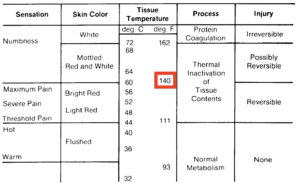
The federal OSHA standard(s) are not very helpful when it comes to guidance on guarding hot surfaces and this causes many debates during audits, HAZ assessments, and Pre-Start Up Safety Reviews (PSSR). We probably are all aware of the seven (7) feet rule for guarding “fan blades”…
1910.212(a)(5) Exposure of blades. When the periphery of the blades of a fan is less than seven...
Read More
Most safety professionals attribute “safe work permitting” to process safety, Line Breaks/Process Openings, LOTO, Hotwork, and PRCS. But my first exposure to work permits was because of OSHA’s Hazardous Communications standard…
1910.1200(e)(1)(ii) The methods the employer will use to inform employees of the hazards of non-routine tasks (for example, the cleaning of reactor...
Read More
NOTE: Anyone can download these pamphlets for FREE; just visit the CI bookstore and go through the purchasing process as if you were buying them and you will NOT be charged or even asked for a credit card!
The Chlorine Institute (CI) has updated their Pamphlet 95, Gaskets for Chlorine Service (Ed. 6), and added eleven (11) new gaskets for chlorine service.
Read More
Respondent owns and operates an adhesive and sealant manufacturing facility, which employs about 30 persons, is one of several plants that Respondent operates nationwide with about 45,000 employees worldwide. In the Facility’s manufacturing processes, the facility uses various highly flammable and/or toxic chemicals that are stored in outdoor tanks ranging in size from about 5,000 to 10,000 gallons...
Read More
Before you go off saying their standards are different than ours, these EXCEL Spreadsheets can be modified using OSHA numbers/factors. These are just EXCELLENT TOOLS for those of you trying to establish if workers are exceeding the Action Level or PEL for noise exposures AND these tools will perform the “Hearing Protection Attenuation” evaluation for you. This attenuation...
Read More
This is another hotly debated topic among my tight-knit group of fellow safety and fire protection engineers and Lord knows we have plenty of photographic and video evidence that there seems to be a large segment of the population who need help with Dispensing Fuel into Portable Containers. Hence the government has a code that covers this activity, which many are obviously not aware of or choose...
Read More
This debate reaches far into the safety profession and the opinions will vary widely among us. But recently a state, which will remain un-named for this article, passed a fire code requirement for Flaming food and beverage preparation. One year, many years ago, we were performing audits for a business, and during each audit, we were treated to a nice dinner. One night it was someone’s...
Read More
The criteria for a dust hazard are typically based on an evaluation of dust accumulations in areas of the facility. The combustible dust accumulation level that would support a fire and/or explosion, if there was an ignition source present, depends on numerous factors. For some dusts, accumulation limits are specified. For other dusts, accumulation limits can be calculated. The following standards...
Read More
OSHA has been piece-mealing its own standards along with NFPA standards to formulate a Combustible Dusts National Emphasis Program (NEP) since the 2008 Port Wentworth, GeorgiaSugar Refinery explosion. There is always some confusion about OSHA using consensus standards outside of their own safety standards and when it comes to Com Dust enforcement, they rely heavily on the NFPA standards. ...
Read More
Ever wonder what an OSHA Compliance Safety and Health Officer (CSHO) looks for to establish that a combustible dust hazard may be present? Here are the top 10 indicators they look for when wondering if the business has a Combustible Dust…
…
HomeRead More »
Read More