










Whenever I am doing a Chlorine project this always comes up, as I almost always try and get anyone who is using elemental chlorine to make the switch to “bleach”, or sodium hypochlorite (NaOCl). Too many facilities are not capable of safely storing and handling elemental chlorine – that is just a hard fact. These businesses who are using “short-filled” cylinders,...
Read More
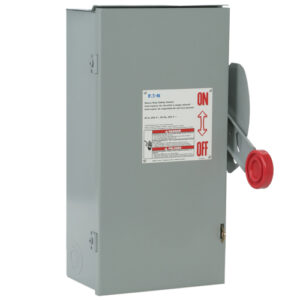
In a lot of older plants, personnel who are locking out equipment are not granted the convenience of a “local electrical disconnect,” meaning they have to use what I call “knife disconnects” such as this:
Or do we make the qualified electrical workers the “gatekeepers” of all electrical LOTO, and thus only they operate these switches?
When workers who are NOT “qualified...
Read More
This case has bounced around for a while now, but the power plant won their case and had the 29 C.F.R. § 1910.120(q)(3)(iv) citation vacated by the OSHRC. On a personal note, I agree with the dissenting opinion. Only Item 2 of that citation is at issue on review—it alleges a violation of 29 C.F.R. § 1910.120(q)(3)(iv) and proposes a $9,054 penalty because employees who responded to...
Read More
You have to be really special to get EPA’s Criminal Investigation Division involved in your RMP inspection – DONT BE SPECIAL! But once again we have a NH3 refrigeration facility just not “getting it”…
The case was prosecuted by Assistant U.S. Attorney Terrence P. Donnelly, with the assistance of Dianne Chabot, EPA Regional Criminal Enforcement Counsel and was investigated by...
Read More
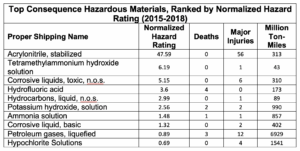
PHMSA identifies the hazardous materials that have been linked to the most serious consequences in terms of deaths and major injuries relative to exposure. The Office of Hazardous Materials Safety (OHMS) periodically reviews the incident data to explore, develop and refine methodologies that illustrate which hazardous materials are most likely to be involved in death and major injury relative to how...
Read More
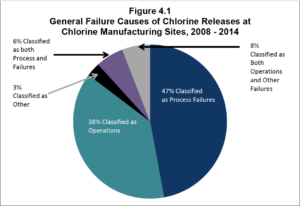
Here are the official numbers from The Chlorine Institute:
…
HomeRead More »
Read More
The phase-down and restriction of the most common and widely used refrigerants was initiated in the late 1980’s and has spurred innovation, both for the alternative refrigerants that have been introduced as well as in the equipment that uses them. Safety Group A2L refrigerants (lower toxicity and lower flammability) represent the most recent in the focus of deployable reduced GWP/zero ODP refrigerants....
Read More
I will give these guys this credit… they make great videos for the ammonia refrigeration industry. But as a safety professional, I was appalled at some of their actions and lack of safety while watching two of their videos. This particular video shows two (2) workers removing and replacing an NH3 valve – a clear “line break” task. One of my biggest beef with...
Read More
After nearly 20 years in ER specializing in large-scale incidents, I can say that with this news I am sorry I got out of the work when I did. This addition to the rails of the USA will be a fun and wild addition. LNG—referred to as “Methane, refrigerated liquid” within the HMR—has been transported safely by trucks on highways and by marine vessels for over 40 years in the United States,...
Read More
I see this practice, keeping cylinders in-service beyond their hydro due dates, and I just want to make everyone aware that although this practice may be complaint with 49 CFR Part 180, it sets up the Emergency Response Team (ERT) with a potentially serious Breathing Air (BA) issue during a response. There are two failures, both are quite common finds during our ER audits/assessments, that come...
Read More
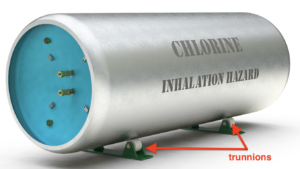
This week I shared a serious chlorine incident that sent seven (7) people to the hospital, including firefighters and neighbors. This incident could have been managed very easily and with much fewer impacts on responders and the community had the facility followed basic RAGAGEP requirements for their 1-ton chlorine containers. Basically, the leak was on a fusible plug in the liquid phase...
Read More
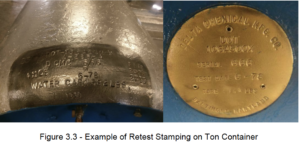
We have discussed hydrostatic testing of all sorts of containers, most notably our SCBA cylinders and our process piping. But one very important cylinder I do not mention near enough is the 1-ton Chlorine cylinders. All chlorine cylinders, except DOT 3E 1800, MUST BE HYDROSTATICALLY TESTED EVERY FIVE-YEARS from the date of the previous hydro test (49 CFR Parts 100-185). The DOT 3E...
Read More