












I will offer my 1-day PRCS training class for SAFETY PROFESSIONALS for FREE as long as a company steps up to sponsor the course. Sponsoring a course means you provide the training accommodations and lunch; SAFTENG provides the training and materials. The sponsor gets 3-5 seats in the class in return for sponsoring the course.
I prefer this to be done within 4-hrs of Cincinnati, OH; but I am willing...
Read More
Contractor Safety training at petroleum refining or petrochemical manufacturing facilities (WA-OSHA)
The department is initiating rulemaking to implement the advanced safety training requirements for High Hazard Facilities. Chapter 49.80 RCW, enacted in 2019, requires owners of petroleum refining or petrochemical manufacturing facilities to use a skilled and trained workforce when contracting for construction, alteration, demolition, installation, repair, or maintenance work. By January 1, 2022, all...
Read More
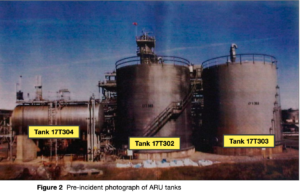
Shortly after 6 pm, on June 2, 2011, an atmospheric storage tank within the amine regeneration unit exploded. A fireball split the tank open and killed four (4) workers. The sole survivor sustained severe burns and suffered life-changing injuries. The force of the explosion ejected the five-ton steel tank roof over 180 feet through the air. After narrowly missing a multi-fuel pipe track, the...
Read More
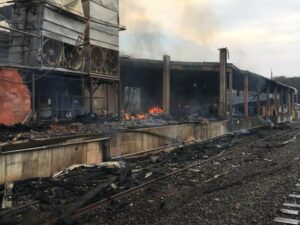
Last week EPA updated its National Compliance Initiative: Reducing Accidental Releases at Industrial and Chemical Facilities data and included an updated photo…
Is this another “shot across the bow” to the ammonia refrigeration industry?
They also updated their data with their 2019 Inspections:
…
HomeRead More »
Read More
So much media coverage of the explosion in Northwest Houston on January 24, 2020. It is assumed that the explosion was caused by a propylene leak, a flammable gas that most people had never heard of before the explosion. What is so sad is that some politicians are jumping on board this tragedy and calling for OSHA and EPA to answer why this facility was not a PSM and RMP facility. ...
Read More
The corrections concern the following regulations and standards:
…
HomeRead More »
Read More
In November 2019 a manager, 32, of a restaurant, a national chain, was overcome by chlorine gas and died. The investigation established that a worker at the restaurant spilled a “cleaner” on the floor during the day. Then later that night, a different employee started to clean the floor with a “floor cleaner”. The mixture of the previously spilled “cleaner”...
Read More
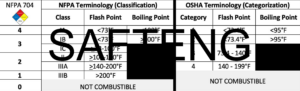
A client has allowed me to share work I did several years ago when OSHA’s GHS threw a wrench into the flammable liquids world! There was so much confusion between Class and Category of flammable liquids, and during an engineering review, it was discovered that the engineering group had made a conversion error when going from OSHA’s Categories back to Classes in order to meet local...
Read More

When most ordinary people hear the term “Hazardous Location” many conjure images of a dangerous location associated with typical hazards; however, when a safety engineer or engineer from the process industries hear the phrase we immediately elvate our antenna and sit up and pay close attention to what is being said. But for those outside of chemical processing indutries, most have...
Read More
In 2014, the Occupational Safety and Health Review Commission (OSHRC) issued a judgment on an OSHA case, and in the case, they made it clear that “magnitude” matters in lockout/tagout (LOTO). But for some reason, this piece of data is absent from many machine-specific LOTO procedures and OSHA always takes issue with this oversight. So where is “magnitude” required...
Read More
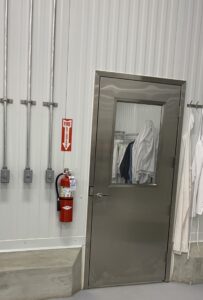
In 2013, we discussed the OSHA and NFPA requirements for “identifying fire extinguishers” in Fire Extinguishers… Did you know they have to be identified?
In that article, we touched on the OSHA and NFPA requirements for how fire extinguisher LOCATION(s) (not the actual fire extinguishers) are to be identified.
But how many of us see this just about everywhere we go:
Do...
Read More

What do you get when you have no “qualified/competent” person on site who fully understands the implementation of a Confined Space program AND OSHA’s eTool Industry page is being read literally by the unqualified worker? The answer: SERIOUS PRCS PROBLEMS! I had a smile on my face the entire time I was thinking about how to write this article in the hopes that industry...
Read More