










Below are the items on OSHA’s regulatory agenda. I have posted their scope on the standards that play a major role in the facility’s I do work in and links to all of the other items for those of interest to you.
…
HomeRead More »
Read More
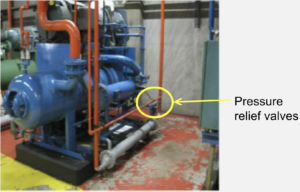
In April 2011, an OSHA State Plan investigated a 3,600-pound ammonia release at a large warehouse where anhydrous ammonia is used in the refrigeration system in a cold storage building. In this incident, one worker was burned on the arm from the escaping gaseous ammonia. As part of the planned mechanical integrity schedule, two (2) employees were changing out the two (2) pressure relief valves...
Read More
Employees #1 and #2 were draining refrigerant oil from anhydrous ammonia refrigeration system oil traps in fruit cold storage warehouse(s). They were working approximately 24 feet above floor level on a mobile scissor lift personnel platform using hand tools including a wrench, a flashlight, and a bucket. The cause of the unexpected ammonia release is unknown. Employees #1 and #2 suffered thermal and...
Read More
At approximately 9:30 p.m. on June 30, 1993, Employee #1, a cleaning contractor, was cleaning up the “cut floor” at a beef facility in Council Bluffs, IA. The facility maintenance employees were removing an ammonia valve from the refrigerant line in the ceiling and had NOT locked or tagged out the isolation valves on the roof. The valve on the cut floor was removed and taken to...
Read More
On December 26, 1989, Employee #1 was attempting to replace a leaking oil valve on a minus 30-degree freezer when a tank inside the freezer exploded. The company uses anhydrous ammonia to manufacture ice cream. The liquid ice cream mixture (at 50 degrees) is added to the tank. When the liquid ammonia changes to a gas, the liquid ice cream mixture becomes solid. As the ammonia gas pressure builds up...
Read More
An oil separator on a two-stage ammonia refrigeration system became overpressurized and exploded, killing Employee #1. While looking for Employee #1 after the accident, Employee #2 fell into a drain. Ammonia that had been uncovered as a result of the explosion had flowed into the drain. Employee #2 was hospitalized.
…
HomeRead More »
Read More
At approximately 3:15 pm on May 9, 1986, employees started to charge the number 1 line Carbo-Cooler, using a cylinder containing 150 pounds of anhydrous ammonia at 129 psi (room temperature). Employee #1, in an effort to speed the charging process, was running hot water (132 degrees F) over the ammonia cylinder (to raise the internal pressure). Approximately 15 minutes later the cylinder...
Read More
A pressure vessel in an ammonia refrigerator system at an ice plant ruptured under pressure of 170 psi. The explosion caused extensive physical damage and released dense clouds of ammonia gas. Employees #1 through 4 died of acute ammonia inhalation.
…
HomeRead More »
Read More
Employee #1 was exposed to ammonia gas on November 20, 1984, during an ammonia leak from refrigeration piping in a compressor room. A threaded joint weakened due to excess vibration and cracked. When it failed, ammonia was released. An unapproved gas mask was used by the employee. Employee #1 died the following December 16th from acute bronchopneumonia brought about by inhalational airway and lung...
Read More
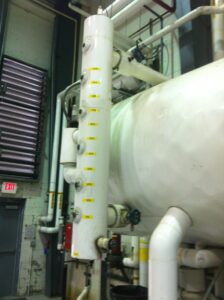
Car Seal programs have gained some attention in the refrigeration industry over the years, but there is still a significant debate over whether such a program is needed in the industry. A past incident at a client’s facility and the root cause of that incident shine a bright light on the need for a Car Seal program in the industry. This incident occurred during start-up AFTER...
Read More
Although this serious injury incident occurred at a car wash, the decision of the OSHRC on guarding the chain conveyor and the workers having to work around it due to a change in work practices is an interesting take on “exposure to a hazard”. If you have ever gone to a car wash that requires you to put your vehicle into neutral gear and then the vehicle is pulled through the wash,...
Read More
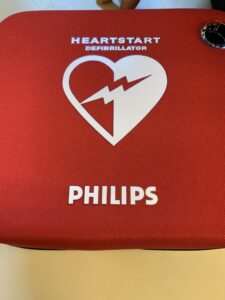
AED’s have become extremely popular in the past decade; they are in just about all public places like airports, government buildings, and many private businesses. These devices require little to no official training, as the device’s computer walks the user through the entire process of saving a life. But these devices do NOT last forever! Today, the plant I am at this...
Read More