














One of the biggest mistakes I see in my auditing and the biggest frustration I have when facilities state they treat all of their confined spaces as PRCS is that most have not recognized the fact that a roll-off trash compactor and/or large palletizers are actually Permit-Required Confined Spaces. For example, we have a large palletizer as shown below, ask yourself… is inside this machine...
Read More
Our behind the scenes debate continues and now a number of clients have joined in with their take on the matter. The fundamental part of our debate has come down to two (2) positions:
does a fall inside or into a Confined Space make that CS a Permit-Required Confined Space?
if you said yes to #1, then can the space be “reclassified” under 1910.146(c)(7) or 1926.1203(g)?
As I have ALWAYS...
Read More
Respondent operates an ammonia refrigerant system which contains approximately 8,487 pounds of ammonia which is processed, handled, and stored in the ammonia refrigerant systems, and ammonia is a regulated extremely hazardous substance listed under Section 112(r)(3) at 40 C.F.R. § 68.130. EPA inspected the Facility on June 7, 2018. Prior to the June 7, 2018 inspection, Respondent had not performed...
Read More
I have been doing process safety my entire career and I have had some of the finest engineers teach me process safety. Now those that know me, know I am just some dumbass western KY edua-macated safety redneck, but even I know the importance of intenral inspections on my PVs. I know only two (2) RAGAGEPs for my PV inspection(s):
API 510
NBIC Part 2 – Inspection
I prefer API 510,...
Read More
Several years ago I wrote an article about how a space goes through its transitions to become a non-permit required confined space. A space is not identified as a non-permit required confined space during its first evaluation; it becomes one after it has been “reclassified” using either (c)(7) or 1926.1203(g). That article caused quite a stir with my readers, but most were convinced...
Read More
UPDATED on 8/21/2019 with the 2018 IFC Commentary…
I am guessing that someone has published a technical paper or article stating that an “electrical shunt” is no longer a code requirement for ammonia refrigeration engine rooms. This has caused several of my clients and subscribers to ask me if this is true as this goes against some of my previous article where I reference the...
Read More
A company was fined $220,000 by the State Courts today under section 12(1) of the Workplace Safety and Health Act (“WSHA”) for failing to take adequate safety measures for its work in an underground storage tank. On 25 July 2016, four workers were instructed by their supervisor to clean an underground storage tank, a permit-required confined space 3.2m (10.5′) deep, that...
Read More
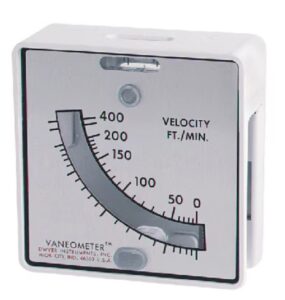
This $50 device is priceless in validating that the ventilation system is functioning as designed
Verifying that a mechanical exhaust system provides sufficient airflow is critical for preventing the accumulation of flammable vapors. The use of a Vaneometer™ is ideal for monitoring low-velocity air currents (typically 25 to 400 feet per minute) at the face of hoods or exhaust inlets. This $50 device...
Read More
OSHA cited a paper product manufacturer for exposing employees to hot steam and failing to ensure the use of proper hazardous energy control methods. The company faces $211,400 in proposed fines. OSHA launched an investigation of the facility after hot steam burned an employee trying to repair a leak on a steam-line header. OSHA determined the header had been leaking for several...
Read More
OSHA has cited a poultry processing company $119,341 for exposing employees to hazardous chemicals. On January 27, 2019, 12 employees needed transport to nearby hospitals after a leak caused the release of 2,100 pounds of anhydrous ammonia. OSHA cited the company for failing to provide an operable alarm responsible for indicating the release of hazardous chemicals. OSHA also cited the facility for...
Read More
The 2019 edition of the National Board Inspection Code (NBIC) has been available for purchase since July 1st, 2019. Here is a summary of the major changes:
…
HomeRead More »
Read More
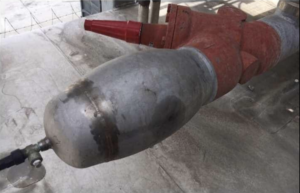
This is another picture that was shared with me and is making the rounds on social media. It certainly appears to be a liquid (hydrostatic) expansion event on a stainless steel pipe. The story goes and I can certainly see this happening…
Valve installed when hot out.
Valve didn’t fully seat and allows vapor to pass into the lower pressure where it condensed when it got cold...
Read More