












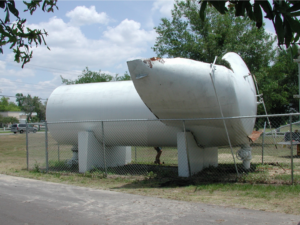
I have many questions about this picture but was told this was the results of a failed hydrostatic pressure test after a non-certified repair was made. Has anyone seen this picture before? Got an incident report to go along with the image? My source is very trustworthy, but I just would like to have an incident report that goes with this picture. I have checked the National...
Read More

Another example of not understanding the chemical hazards in your CS/PRCS… This OSHA case shows us that “pits”, even those that would are not identified as a PRCS in a site evaluation can be deadly from the work we do inside them! When using a chemical that has a Vapor Density 3X’s that of air (1) inside a 10′ deep pit is creating both a FLAMMABLE ATM and in this...
Read More
I am guessing that maybe we should have had the “Top 11 Myths” rather than the “Top 10 Myths” in our presentation at Safety2019! I continue to get emails from folks who want to convince me that “ventilation is required for all entries into PRCSs”. I have even had a face-to-face discussion with an OSHA CSHO from a State Plan who informed that it was required...
Read More
I was always taught from my very first Plant Manager the “standard of safety/risk” is FAMILY. When that manager/supervisor would not think twice of having one of their family members work in their department/unit, they have then achieved the FAMILY SAFETY STANDARD. Now I am not talking about their children, but if they had a teen daughter or son, who was physically capable of doing...
Read More
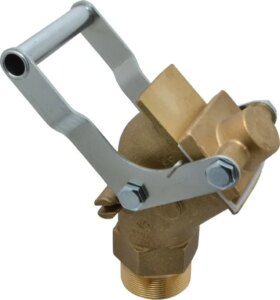
This week I posted the requirement for transferring a flammable liquid using “gravity”. This requirement comes from OSHA’s flammable liquid standard…
1910.106(e)(2)(iv)(d) flammable liquids shall be drawn from or transferred into vessels, containers, or portable tanks within a building only through a closed piping system, from safety cans, by means of a device drawing...
Read More
There is a sound reason why OSHA’s Flammable Liquid Standard has required a deadman valve for over 40 years and it is the same reason why I have written about their use for 20 years… When things go bad and you need to get the heck out of dodge quickly, you can do so AND stop the flow of the flammable liquid.
1910.106(e)(2)(iv)(d) flammable liquids shall be drawn from or transferred into...
Read More
PLEASE NOTE this case is significant in that many facilities in the OSHA arena will EXEMPT their “methanol” from PSM coverage using the “Atmospheric Storage Tank” exemption (e.g. 1910.119(a)(1)(ii)(B) or called the “Meer Decision”). EPA couldn’t care less about this OSHA exemption, as is evident in this case! There is NO EPA RMP exemption...
Read More
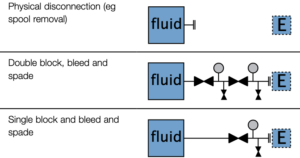
Since I shared my article last week on OSHA’s position of NOT allowing “exclusive control” to be carried over to process valves like we do with “cord and plug” electrical equipment, my international friends and clients have been having quite the chuckle at us here in the USA. They all say virtually the same thing… “you guys sure do make something so simple,...
Read More

One of the more common deficiencies that we find in our audits is the lack of electrical gloves testing. 1910.137, Table I-5 establishes the testing frequency for these gloves; however, the confusion comes with the “footnote” which states…
If the insulating equipment has been electrically tested but not issued for service, the insulating equipment may not be placed into...
Read More
Respondent owns and operates a liquefied petroleum gas plant which handled and handles a maximum of approximately 3,548,000 pounds of propane and 761,400 pounds of butane at the Facility. EPA conducted an inspection of the Facility on October 17, 2018 to determine Respondent’s compliance with CAA Section 112(r)(l) and (7) and the Chemical Accident Prevention Provisions at 40 C.F.R. Part 68. Respondent...
Read More
The objective of this project was to conduct refrigerant R-290 (propane) leak and ignition testing under whole room-scale conditions to develop data and insight into the risks associated with the use of Class A3 Refrigerants and to generate technical data to support revisions of relevant safety standards.
The entire project included parametric testing to investigate how key...
Read More
SAFTENG NOTE: Please do NOT misunderstand what is being said here. This study was in NO WAY an endorsement that cell phones are safe for hazardous locations. What is being said, is that cell phones do not cause gasoline fueling fires; which we have debunked that myth here for over a decade. Static electricity generated by the person fueling their car is the ignition source for...
Read More