













OSHA has cited the company contracted to clean lines and vessels at the plant and the processing plant for serious safety violations after a fatal fire at a natural gas processing plant in Pennsylvania. OSHA inspected the company contracted to clean lines and vessels at the plant after four contractors suffered burns and needed hospitalization. One of them later died. OSHA cited the...
Read More
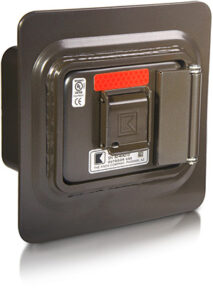
One of my pet-peeves is CONTROLLING ACCESS to process battery limits. Even OSHA and EPA felt this was so critical that they actually mention it TWICE in their process safety standard/rule. They cover it in Operating Procedures for all company personnel and again in Contractors for those visiting the facility. But there is one group of “visitors” who MUST have access...
Read More
Technical Tip Tuesday… nitrogen is NOT heavier than air! In fact, pure Nitrogen gas is LIGHTER (~3% lighter) than the Oxygen and Argon (with the Nitrogen) that make up our atmosphere. It is perfectly mixed in the air. Hence the air we are breathing right now (assuming you’re on the surface of the earth) is 78% Nitrogen. Nitrogen and Oxygen (21%) are perfectly mixed in or atmosphere....
Read More
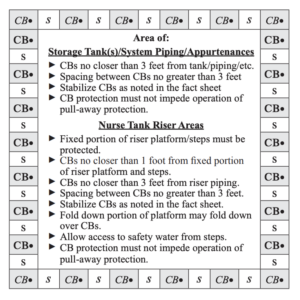
Anyone who works with SAFTENG knows we are serious about facility siting and more specifically VEHICLE IMPACT PROTECTION. This stems from my horrible luck I had with vehicles around my covered processes. I can not even remember how many incidents I suffered while a safety engineer in the petrochemical and semiconductor industries with everything from cranes to golf-carts hitting the...
Read More
2019 has been a year of coal-fired power plants for me so far! It’s only June, and I have spent more than four weeks in these facilities. With that said, I wanted to provide my friends in that industry who operate an SCR some factual information on their Anhydrous Ammonia (NH3) piping and what ANSI K61.1/CGA 2.1 and ASME B31.3 have to say about how this piping is constructed.
ANSI K61.1/CGA...
Read More
The state of North Dakota has an excellent state code for Anhydrous Ammonia. They have done so much more than just adopted ANSI K61.1/CGA 2.1. They have written a code for a process safety novice, using the RAGAGEPs as their foundation.
…
HomeRead More »
Read More
This study essentially concerns refrigeration installations using ammonia as a refrigerant. However, in order to better understand and to place the risks associated with these installations in perspective, quantified information has also been collected on numerous accidents, both French or foreign, in other industrial or agricultural activities and in the field of transport....
Read More
Inside a vinegar plant, a 150-m³ tank containing 38.5 m³ of an alcohol vinegar mixture exploded around 9:40 am. The 3,000-m² site had been in activity start-up mode, but engineering works were still underway. The tank bottom became detached from the shell. It’s upper part, measuring 13 m high, 4 m in diameter and weighing some 3.5 tonnes, was projected upwards, by missile effect....
Read More
Ten kilos (22 pounds) of hydrogen chloride gas was released from a flange that had been fitted by a contractor just a few weeks earlier, triggering alarms and resulting in an internal emergency intervention. The incident had no significant consequences. A contractor performing maintenance was instructed to remove the pressure sensor from a device and replace it with a blind...
Read More
A contractor at an upper-tier Seveso plant was cleaning an underground tank so that it could be filled with a different product. The tank was located in an outdoor area comprising 12 horizontal underground multi-compartment tanks, each having an overall capacity of 60 m³ (nominal compartment capacities of 10, 15 and 35 m³) and containing flammable liquids (solvents or petroleum...
Read More
At around 11:00 p.m., phosgene (COCl2) and chlorobenzene began leaking inside the containment building of a chlorinated chemicals plant. The leak was detected at levels between 13 and 22 ppm by analyzers inside the containment. The analyzers’ control system automatically directed the air inside the containment towards the caustic scrubber. Technicians began looking for...
Read More
The irony in this post is thick with sulfur smoke!
SAFTENG Members can read my 2012 article Sulfur sticks and ammonia leaks… are you in compliance when using these leak detection devices?
This video shows us what happens when we introduce a lit sulfur stick into an NH3 gas leak. Imagine someone doing this in a larger leak without the ability to measure the concentration and they are placing...
Read More