








In 2017, the NBIC was restructured into four (4) parts, adding a new Part 4, Pressure Relief Devices. This purpose of this restructuring was to provide one distinct integrated part for pressure relief devices compiled from all PRD information referenced in Part 1, Installation; Part 2, Inspection; and Part 3, Repairs and Alterations. And in this new Part 4, Pressure Relief Devices, the National...
Read More
An “Emergency Pressure Control System” has been a requirement in the IFC and IMC for several iterations of these codes, and yet it can be a very confusing requirement as they are not found in the vast majority of mechanical refrigeration systems using Anhydrous Ammonia as the refrigerant. Part of the problem may lie in the fact that the IIAR does not recognize this emergency system...
Read More
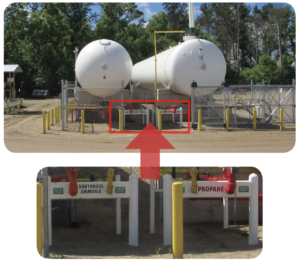
Last August I posted an incident where a 3rd party carrier unloading his/her NH3 truck to an LPG storage tank (SAFTENG Membership content). The contents of the LPG tank had to be burned/flared off which took around 60 hours. There were no injuries in that incident, but the consequences of such an error could be catastrophic. And unfortunately, this exact scenario occurs...
Read More
Those of us under Federal OSHA can let our contractors follow their own LOTO program/practices AS LONG AS they explain them to us. However, in some states, their OSHA plan requires contractors to support the “on-site employer’s” LOTO program. As I have written about, most workplaces struggle to manage their contractors PROPERLY when LOTO is involved in their work scope.
From...
Read More
Those who practice “process safety” are all too familiar with “Line/Equipment Opening” safe work practices. Although there is NO formal OSHA standard, nor even a RAGAGEP on this extremely hazardous task, we should consider implementing a “permit” of some type to manage the risks associated with opening any pipe, line, hose, equipment that handles a hazardous...
Read More
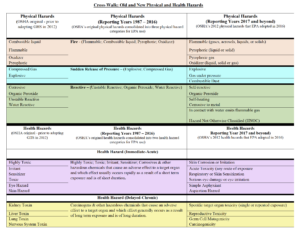
I know we are past the 2018 reporting deadline (March 1st), but last week (4/10/18) EPA posted a beneficial tool for those of you who work with EPCRA Tier Sheets. EPA and OSHA did an excellent job developing this cross-walk worksheet to assist facilities in comparing OSHA’s original and new physical and health hazards adopted from the Globally Harmonized System of Classification and Labeling...
Read More
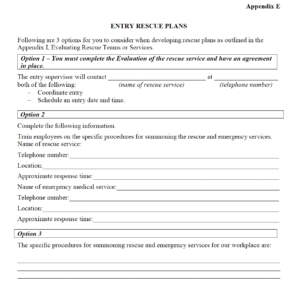
This year WA-OSHA (Washington State Dept. of Labor & Industries) issued their Construction PRCS standard in February. Since this is a State Plan Standard, it had to be at least as effective or more effective than the Federal Construction Standard on PRCS’s. With that said, the WA state’s standard does provide us with more information, insight, and tools. One such device...
Read More
One of my favorite things about state plans… they often provide more insight into OSHA standards. Take for instance the state of WA OSHA’s, called Washington State Dept. of Labor & Industries, Safety Standards for Confined Spaces document. The state’s Construction standard on Confined Spaces closely mimics Federal OSHA’s requirements, but it is HOW...
Read More
Nationwide, approximately 1.3 million workplaces provide at least a portion of their employees with respiratory protection. One of the most common types of respiratory protection is the filtering facepiece respirator (FFR), which is designed to be discarded when it becomes unsuitable for further use due to considerations of hygiene, excessive resistance, or physical damage. However, due to the considerations...
Read More
Over 3 million United States employees in approximately 1.3 million workplaces are required to wear respiratory protection. The Occupational Safety and Health Administration (OSHA) (29 CFR 1910.134) requires an annual fit test to confirm the fit of any respirator that forms a tight seal on the wearer’s face before it is used in the workplace.1 Once a fit test has been done to determine the best...
Read More
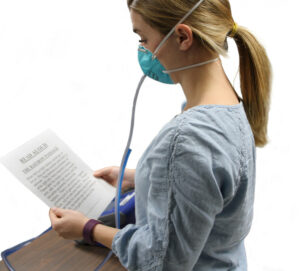
Filtering out Confusion: Frequently Asked Questions about Respiratory Protection Fit Testing (NIOSH)
Over 3 million United States employees, in approximately 1.3 million workplaces, are required to wear respiratory protection. The Occupational Safety and Health Administration (OSHA) (29 CFR 1910.134) requires an annual respirator fit test to confirm the fit of any respirator that forms a tight seal on the wearer’s face before it is used in the workplace. This ensures that users are receiving...
Read More
Ammonia refrigeration “diffuser tanks” have been around since the early 1990’s when the Uniform Fire Code (UFC) began requiring them. That means some of these tanks will be due for their Mechanical Integrity Inspection and this is when most facilities will realize that the process design does not lend itself for a safe means to enter this tank for an internal inspection. And yes,...
Read More