









4/20/2018 UPDATE: To further this discussion… consider a diffuser tank is 95% effective (Source: IIAR Technical Paper), meaning that 5% of NH3 would theoretically make it to the atm. WHEN that 5% is greater than 100 pounds, you have a REPORTABLE RELEASE. Using an actual “oil separator” at a client, the RV has a 0.75″ discharge with a 19 pounds/minute rate @ 300 psi...
Read More
WARNING! Viewer Discretion Advised
Read More
The Association for Rubber Products Manufacturers (ARPM) is an organization that was started in 2010 after elastomer products company executives belonging to the RMA mutually agreed that a stand-alone association was needed for codes/standards. Those of us in the process safety field are all too familiar with the RMA and ARPM, as these organizations write the “holy grail” RAGAGEPs...
Read More
Almost every manufacturing facility that handles a hazardous material will utilize hoses in their handling of the material. And one of the biggest risk any facility will manage is the BULK UNLOADING/LOADING of their HAZARDOUS MATERIALS. Whether the hazardous material is a PSM/RMP covered chemical or just a good ole fashion HAZMAT, the integrity of bulk unloading/loading hoses need to be...
Read More
Last month, March 2018, WorkSafe BC revised their “Ammonia in Refrigeration Systems” manual. This manual describes the hazards of ammonia and how to prevent and control exposure. It lets you know your responsibilities as an employer and shows you how to prepare for emergencies and investigate ammonia releases to help prevent future accidents.
Read More
Current Statistics
To date, DHS has received more than 88,258 Top-Screen submissions from more than 40,000 unique facilities. Of these, the CFATS program currently covers 3,441 facilities. These high-risk facilities are divided into four tiers, with Tier 1 facilities posing the highest security risk.
CFATS Activities
It is important to note that this regulatory program is cyclical, meaning activities...
Read More
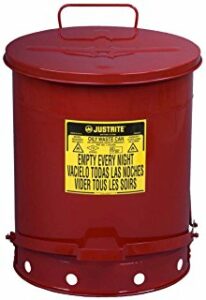
Well, since I am writing about it, you have probably already know the correct answer. But where does this requirement originate? OSHA Standard(s), OSHA’s General Duty Clause, EPA standards, or…
Yep, you guessed it – the International Fire Code (IFC). Granted, the IFC is not heavily enforced BEFORE accidents, but most states have adopted the IFC wholly or in some...
Read More
Is your fire water is a “protection/mitigation” safeguard in your Process Safety program? Most covered processes, whether toxic or flammable, will utilize firewater as a “critical utility” to help protect/mitigate a release and/or fire from the process. When this is the case, our fire water system (reservoir(s), pump(s), fire water piping, hydrants, monitor nozzles,...
Read More
If you work in a state/county/town/township that has a “fire code” inspector, how would your facility measure up to these Top Citations for Group H Occupancies? By the way, here is an excellent summary of the five sub-groups in Group H:
High-hazard Group H-1 buildings and structures which contain materials that pose a detonation (explosion) hazard.
High-hazard Group H-2 buildings...
Read More
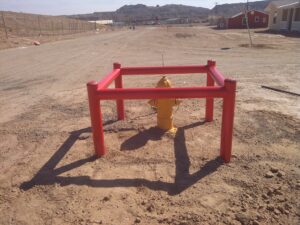
Recently we were performing an audit at a clients facility in which we had done the previous 3-year PSM/RMP audit. And during that prior audit, we observed a damaged hydrant that had been out of service for several months, and we came across another instance where the facility identified another hydrant that was damaged; both were damaged by powered mobile equipment. So, of course, we wrote...
Read More
Industrial
FATALITY Contractor Killed in Accident at BMW’s South Carolina Plant (contractor died in what appears to be a workplace accident in the paint shop of a vehicle plant)
FATALITY Worker Dies at Plywood Mill in Southern Oregon (worker, 57, died in an accident at a plywood plant – he had worked for the company since 2010)
FATALITY Worker Dies in Accident at St. Joseph Sawmill (worker,...
Read More