













At all times relevant to this Complaint, Respondent owned and operated buildings, structures, installations, equipment, pipes or pipelines, and storage containers, located on a single site or on contiguous or adjacent locations, where it deposited, stored, disposed of, or placed, Ammonia CAS# 7664-41-7. Ammonia CAS# 7664-41-7 was a “hazardous substance” as that term was defined...
Read More
Recently a facility had an NH3 release via an RV and in the spirit of “doing it right” made all the necessary calls, including notifying their local FD. The FD arrived, although it was not required as the facility response team had matters under control before their arrival, the FD felt it was necessary to issue a SIP alert for those within 1,000′ of the facility. This...
Read More
Employees such as chemical process operators may be required to shut down processes, close emergency valves and otherwise secure operations that are not in the hot zone or danger area before evacuating in the event of an emergency. (See 29 CFR 1910.38(a)(2)(ii).) These procedures need to be delineated carefully, and employees must be trained to be able to perform these pre-evacuation procedures safely....
Read More
For SAFTENG members… I have revised my Car-Seal Program to incorporate the “attendance requirements” for deviated valves.
…
HomeRead More »
Read More
Filmed under controlled conditions, this video demonstrates the explosive power of igniting a drum containing flammable vapors. This drum is manually ignited to simulate what can happen when a used drum is cut or welded.
Read More
This news report video does an excellent job, especially the accounts from the Fire Chief on the mistakes made by the workers AND the WOULD BE Rescuers AND the actual emergency responders.
Read More
On October 3, 2016, a warehouse employee was seriously injured when seven crates containing 94-pound struts fell from a stack onto him as he was inventorying them. There were no witnesses to the accident, and the injured employee has no memory of the event. Following an inspection by OSHA, the Secretary concluded the cause of the incident was the instability of the stack of crates. The Secretary issued...
Read More
The Department of Energy has a little-known database that is a goldmine for emergency planners and responders. This database is called the Protective Action Criteria for Chemicals (PACs), and it uses a hierarchy-based system of the three (3) exposure guideline systems:
Acute Exposure Guideline Levels (AEGLs)
Emergency Response Planning Guidelines (ERPGs), and
Temporary Emergency Exposure...
Read More
From the WorkSafeBC annual report…
In 2017, following work-related deaths at an ice rink, we utilized the Risk Analysis Unit’s research on ammonia exposure to launch a three-phased province-wide inspection initiative focusing on ammonia exposure to ensure that owners and employers of facilities using ammonia are correctly managing the risks associated with the toxic gas. In late 2017, the...
Read More
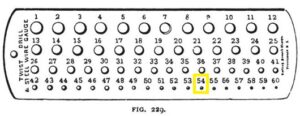
Have you ever wondered what a “No. 54 drill-size Opening” is? This is a phrase used in OSHA’s 1910.111, Storage and handling of anhydrous ammonia. In simple terms, OSHA has established that if the potential leak is through an opening of No. 54 drill-size or smaller then, the opening need not be protected by an excess-flow valve. Here’s what I am talking...
Read More