








In early 1999, a number of reports were circulated in the news media and on the Internet suggesting that cell phones could cause a fire or explosion if used at gas stations. Although the reports were speculative and unconfirmed, the issue gained impetus when warning labels began to appear at service stations. In response to these events, this study was initiated to define and investigate the extent...
Read More
The State of Ohio’s EPA performed “Business Impact Analysis” on their version of the Risk Management Plan, as part of an Ohio requirement. The Ohio EPA RMP rules, which are consistent with federal requirements, became effective August 13, 1999. Ohio EPA received “Delegation of Authority” for the Accidental Release Prevention Program, or Risk Management...
Read More
For those of us who live and work in states that have Risk Management Plan enforcement delegation (like Ohio), Risk Management Plan “fees” are nothing new. But now, Federal EPA is considering charging a “Fee” for those facilities that submit an RMP AND are under federal EPA RMP enforcement. There is no mention if this will be a “double fee” for those states...
Read More
Respondent owns and operates an agricultural chemical manufacturing facility. On or about August 18-19, 2015, EPA conducted an inspection of Respondent’s Facility to determine compliance with Section 112(r) of the CAA and 40 C.F.R. Part 68. Information gathered during the EPA inspection revealed that Respondent had greater than
10,000 pounds of methyl mercaptan in a process at its facility
10,000...
Read More
Respondent Ag’s facility includes bulk ammonia storage operations. On or about September 11, 2013, EPA inspected the facility to determine compliance with Section 112(r) of the CAA, 42 U.S.C. § 7412(r), and 40 C.F.R. Part 68. At the time of the September 2013 inspection, Respondent had greater than 10,000 pounds of anhydrous ammonia stored in a process (bulk storage tanks) at the facility....
Read More
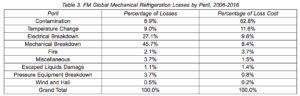
FM Global, my absolute favorite source of RELIABLE and FREE safety information has published a new Data Sheet titled 7-13 Mechanical Refrigeration. This data sheet and hundreds more are available for FREE (after a very brief registration) to anyone. A truly MUST have for any safety professional working in an industrial environment! In their new Data Sheet, 7-13...
Read More
In December 2017, the state of Ohio adopted it’s new “Fire Code” which happens to be a revised version of the 2015 International Fire Code. In November I posted a “heads-up” article about the “proposed” changes to new AMMONIA REFRIGERATION processes built in Ohio after 12/15/2017 and how their relief system(s) will be allowed to discharge. That...
Read More

The French National Institute for Industrial Environment and Risks (INERIS) conducted a study to examine how anhydrous ammonia would behave under a number of different release sceanrios. The main aims of this study were:
to analyse the risks represented by facilities using quantities of ammonia of up to a few dozen tonnes
to complete knowledge on the atmospheric dispersion of ammonia in...
Read More
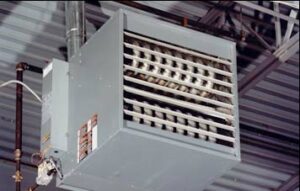
OSHA’s Lockout/Tagout (LOTO) standard is pretty clear… ALL servicing and maintenance activities that require the control of hazardous energy require a machine/equipment-specific written procedure. (e.g. 1910.147(c)(4)
1910.147(c)(4)(i) Procedures shall be developed, documented and utilized for the control of potentially hazardous energy when employees are engaged in the activities covered...
Read More
Industrial
LOTO FATALITYHawkins worker killed at MIS Inc. plant in Phipps Bend (worker, 34, was killed after getting stuck in a large piece of equipment while reportedly trying to dislodge a part that had gotten stuck – as soon as the part was dislodged, the door closed on the worker – death would have been instantaneous – “I observed XXXXXXXX slumped by a machine identified...
Read More
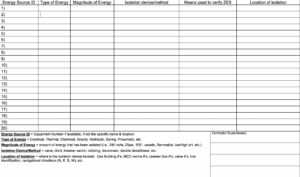
To continue with my series of LOTO articles this month, I want to discuss how 1910.147 plays into our efforts to enter a Permit-Required Confined Space (PRCS). Way too many PRCS entry permits have the basic check-the-box statement “All energy sources isolated – YES/NO.” What the heck is that supposed to meet? Do our “machine specific LOTO procedures”...
Read More
As the debate continues about using “clamshells” as a lockout device, our behind-the-scenes discussions continue regarding OSHA’s use of the term “Substantial”. The discussion was so good I asked if I could summarize and post it to keep the discussions going. So once again, here is OSHA’s definition of a “Lockout device”:
A device that utilizes a positive...
Read More