







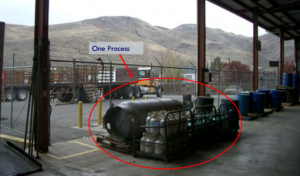
The short answer is ABSOLUTELY WE CAN, but we need to be very careful about how we manage our hazardous materials. The purpose of this article is to clear the air about EPA’s use of our own Tier II reports against our facility… they can be an “indicator” of PSM/RMP covered processes but they are NOT an absolute. Let me explain…
…
HomeRead More »
Read More

In my world, we always had a written barricading safe work practice. This SWP covered everything from using “jersey barriers” to our bollards design and included the use of barricade tape: YELLOW was for CAUTION and could be crossed as long as you had on the required PPE to be inside the barricaded area and RED was for DANGER and ONLY those who were listed on the safe work permit...
Read More

There appears to have been no monetary fine issued with this agreement; instead, it looks as if the facility has agreed to correct all the deficiencies by June 2018. Respondent uses, handles, and/or stores more than a threshold quantity of a flammable mixture and anhydrous ammonia, both regulated substances. The EPA conducted an inspection on April 27, 2016, to assess compliance with 40 C.F.R. part...
Read More
At 11:57 a.m. on December 27, 2016, an employee, 27 years old, was performing a “salt flush” on line four 2,500 lb. double ribbon mixer. He/she dropped an 80 lb. bag of salt into the mixer. A coworker walked down to close the mixer trap door, and the deceased employee entered the mixer to retrieve the bag without first locking out the mixer. After the worker entered the mixer, a...
Read More
I have written repeatedly about Confined Space rescue requirements and the problems with using off-site rescue teams, specifically referencing the requirement of 1910.146(j)(4)…
Duties of entry supervisors. The employer shall ensure that each entry supervisor:
…
1910.146(j)(4) Verifies that rescue services are available and that the means for summoning them are operable;
Now...
Read More
One of OSHA “significant cases” in the month of August was a PSM case at a Frozen Specialty Food Manufacturing facility in KS. Here is a breakdown of the citations:
NOTE: this case is PENDING ABATEMENT OF VIOLATIONS, PENDING PENALTY PAYMENT
…
HomeRead More »
Read More
One of the debates we routinely have with fellow process safety professionals is the adoption of NFPA 51B vs. meeting 1910.252(a) requirements for their Hot Work safe work practice. I am a huge fan of NFPA 51B, as it is much more up-to-date than OSHA’s 1910.252; which by the way was based off of the the first edition of NFPA 51B in 1962. As I have stated many times before, niether PSM (nor RMP)...
Read More
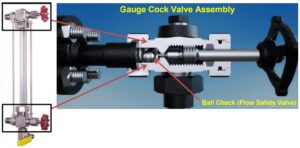
Check-valves are utilized in all sorts of applications, including safety applications – most notably in process safety and hazardous materials safety. In some state fire codes, these valves may even be required in certain lines, and in some process safety RAGEGEPs, they are required. Although this incident occurred in an off-shore rig, the sight-glass involved can be found in just...
Read More
The state of Ohio is in the processing of upgrading the state’s fire code using the 2015 International Fire Code as its basis. This is a summary of the chapters most often used in facilities that handle hazardous chemicals.
…
HomeRead More »
Read More
This 2017 letter of interpretation clarifies the requirements at Section 1904.31, Covered Employees. Specifically, OSHA clarifies who is responsible for recording injuries and illnesses of workers when a prime contractor and subcontractor share supervision at a construction site.
…
HomeRead More »
Read More