CLICK HERE to Renew your Membership
CLICK HERE for a NEW Membership
CLICK HERE to see eligibility requirements for FREE Membership
If you have any questions, please contact me

I am proud to announce that SAFTENG and The Chlorine Institute have renewed our partnership for another year (through 2026). Members of The Chlorine Institute receive a FREE SAFTENG membership. If you qualify, please contact me
NOTE: Any trade group interested in becoming a partner with SAFTENG for your Member Companies, please reach out, and I can share the plan





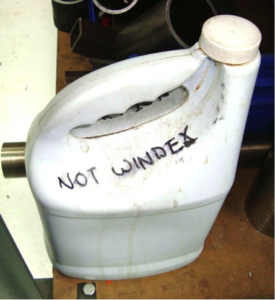
Bottle #1 – WRONG; “not windex” is not a label and to top it off, look at pic #2. Sure looks like Windex and it was being used like Windex, because it was Windex! All joking aside, these types of UNSAFE labeling practices are what lead to those bizarre incidents that show up in the Incident Alerts at least 3-4 times each year of people ingesting hazardous chemicals.
From...
Read More

This report summarizes the results of a Campbell Institute research project to aggregate the best practices of world-class organizations in EHS around the management of contractor and supplier safety. The area of contractor safety management is especially pertinent in an increasingly global and complex world that involves work in multiple countries, non-routine work and the use of international...
Read More
OSHA initiated an inspection on Aug. 4, 2015, under its national emphasis program focused on chemical manufacturers. Inspectors found deficiencies in the employer’s equipment process safety information, process hazard analysis, written operating procedures, contractor safety, equipment inspection and testing along with management of process changes, resulting in the citations.
PLEASE NOTE: this...
Read More
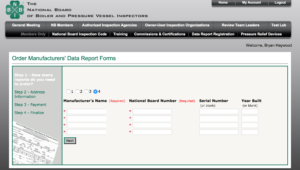
Still one of the top questions and issues we come across today… ASME Data Sheets for Pressure Vessels. As I have written here many times, OSHA states U1 forms are NOT required for complying with the PSI requirements but don’t think for a second that a U1 form is not necessary for a fully functioning process safety management system. So it is my professional opinion that U1 forms...
Read More
This video shows BOTH aspects of a Fall Protection Plan: Personal Fall Arrest System (PFAS) and Rescue. When BOTH aspects are in place we have SUCCESS!
Read More
What’s changed in CAMEO Chemicals 2.5?
Updated chemical library with new Levels of Concern (AEGLs, ERPGs, and PACs).
Added CAS number (a chemical identification number) to the Text Summary screen.
Fixed a typo in the source code for the Chamberlain equation, where the “CR” should be a multiplier in the final term of the equation (not an exponent). This could have an impact on some...
Read More
2016 Fatality Tracker
Electrical
1
(2015 = 38)
(2014 = 55)
(2013 = 32)
(2012 = 68)
Forklift/Aerial
7
(2015 = 48)
(2014 = 60)
(2013 = 62)
(2012 = 52)
Mining*
4
(2015 = 21)
(2014 = 401)
(2013 = 87*)
(2012 = 92*)
*ONLY USA
Explosions
8
(2015 = 135)
(2014 = 157)
(2013 = 194)
(2012 = 241)
Cranes
5
(2015 = 28)
(2014 = 20)
(2013 = 51)
(2012 = 52)
Falls
11
(2015 = 76)
(2014...
Read More
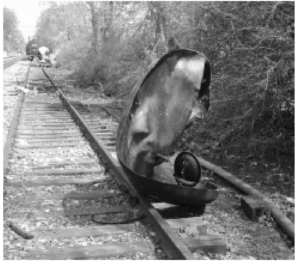
The 316 stainless steel pressure vessel involved had been moved into the Commonwealth of Kentucky approximately ten years prior to the accident. The vessel had originally been used as an atmospheric vessel in the manufacture of ammonium bisulfite, a raw material for caramel color, and later converted to be used as a pressurized unit. The tanks were operated at atmospheric pressure...
Read More
At a brewery in 1997, an operator confused filling nozzles for two commonly used acid cleaning agents and transferred nitric acid into a tank with P3, a proprietary phosphoric acid based cleaner that also contained 5-15 percent isopropanol. 10-15 minutes later the mixture exploded violently. The stainless steel tank disintegrated with such force that fragments lodged in walls of concrete. The explosion...
Read More
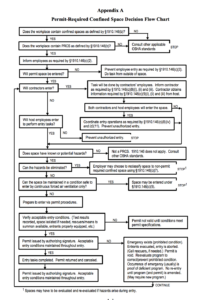
A couple of weeks I posed this question, and I figured there is NOT a consensus among the safety community (including OSHA) as to whether (c)(5) AND (c)(7) can be used on the same PRCS at the same time. My position is NO, they can not be; but I am only one voice in the debate, and many excellent safety professionals have spoken up and said YES. I know it is not clear if we read all...
Read More