












Federal Motor Carrier Safety Administration (FMCSA) is issuing this safety advisory to provide notice to owners and operators of certain cargo tanks that they have been improperly inspected and tested, and must be re-inspected and retested before being used in Hazardous Materials specification tank service. The tanks in question were tested by H&W Tank Testing, CT#8083, Ohatchee,...
Read More
The Federal Motor Carrier Safety Administration (FMCSA) is issuing this safety advisory concerning pressure relief devices (PRD) that were not manufactured or intended for use on cargo tank motor vehicles. PRDs are an integral part of the safety mechanisms for U.S. Department of Transportation (DOT) specification cargo tank motor vehicles and are vital to ensuring the safety of hazardous materials...
Read More
The Ohio Department of Commerce, Division of State Fire Marshal (SFM) has recently completed training modules highlighting significant changes from the 2007 version to the 2011 version of the Ohio Fire Code (OFC). You can access the modules via links on the SFM’s website “2011 Ohio Fire Code Training Modules”. There you will find links to the International Code Council’s...
Read More
The Department of Industrial Relations (DIR), the Governor’s Office of Emergency Services (Cal OES) and the California Environmental Protection Agency (CalEPA) today announced a landmark set of regulations to strengthen workplace and environmental safety at oil refineries across the state. The regulatory proposals are intended to make California refineries safer both for workers and surrounding...
Read More
This is an oldie but a goodie, showing us that it is ONLY vapors that burn.
Read More

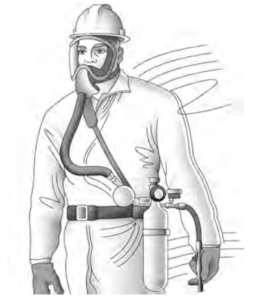
Most of us will envision a vessel’s manway when someone mentions a Permit-Required Confined Space (PRCS). Plenty of PRCSs will have larger entry/egress portals, but they will all be limited in size or configuration such that they will limit entry and egress from the space. With this common characteristic of limited means of entry/egress, entry/egress with respiratory protection can...
Read More

WARNING! Viewer Discretion is STRONGLY advised, video captures the fatal impact of the personnel basket as it fell 60′ from the crane to the rig floor.
Read More
As I have said in the past, the National Board publishes a FREE magazine, The Bulletin, each quarter that almost always contains information that we can use in our daily management of chemical processes. The best part of these FREE articles are they come from a VERY RELIABLE source and are written in such a manner that we do not have to be Professional Engineers (PE) to understand them! This edition...
Read More
Attention to CSB management challenges could result in stronger results and protection for the public, and increased confidence in management integrity and accountability. Based on our continuous audit work, CSB public hearings, congressional hearings and CSB board meetings, EPA’s IG identified three (3) management challenges and one internal control weakness related to operational controls....
Read More
Respondent operates a meat processing facility that uses 24,300 pounds of ammonia as its refrigerant. Respondent has one RMProgram level 3 covered process, an ammonia refrigeration process, which stores or otherwise uses a toxic chemical in an amount exceeding its applicable threshold of 10,000. During calendar year 2014, EPA opened an RMProgram compliance monitoring investigation to determine Respondent’s...
Read More