CLICK HERE to Renew your Membership
CLICK HERE for a NEW Membership
CLICK HERE to see eligibility requirements for FREE Membership
If you have any questions, please contact me

I am proud to announce that SAFTENG and The Chlorine Institute have renewed our partnership for another year (through 2026). Members of The Chlorine Institute receive a FREE SAFTENG membership. If you qualify, please contact me
NOTE: Any trade group interested in becoming a partner with SAFTENG for your Member Companies, please reach out, and I can share the plan





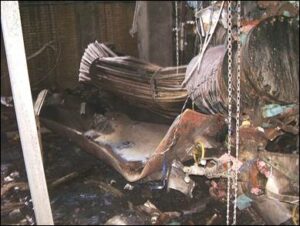
We do not see these types of failures often, but when we do it can almost always be traced back to human error. Back in 2008, a tube and shell heat exchanger catastrophically failed when workers accidentally closed two different valves at two different times between the vessel and its relief valve. On June 10, 2008, operators closed an isolation valve between the heat exchanger shell (ammonia...
Read More

Does the title make you scratch your head? I usually get some strange looks when working with a client who is trying to understand what the PSM compliance cycle looks like. To start with, let’s look at what OSHA/EPA requires in our operating procedures:
1910.119(f)(1)(ii) Operating limits
1910.119(f)(1)(ii)(A) Consequences of deviation
1910.119(f)(1)(ii)(B) Steps required to correct or avoid...
Read More
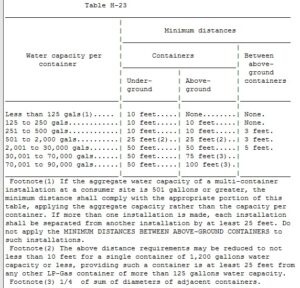
If your PSM/RMP covered process contains a flammable liquid, 1910.106 has provided us with some regulatory facility siting requirements that we can quickly inspect to ensure we meet the minimum compliance distances. If you have liquefied petroleum gases within your facility, 1910.110 provides some basic siting requirements that should be met to have an argument that the propane will not impact your...
Read More
Many chemical processes that are covered under OSHA’s PSM and EPA RMP rules utilize one of the most popular forms of passive mitigation ever known…Diking. However, on the other hand, many of the facilities have not included their dikes in their Process Safety Information (PSI) or their Mechanical Integrity Programs (MIP).
…
HomeRead More »
Read More
I had an interesting dissertation given to me on how to calculate “frequency” when analyzing a PHA scenario during a recent PHA. Although it sounded logical, it was completely off base and thus would have shown the facility at very low risk for all their scenarios. This is something we see from time to time so I thought I would provide my two cents on the matter.
1) PHA participants should...
Read More
Since the great recession of 2008 -2010 we have seen an increase in the used equipment market. This is due to so many businesses going under and auctioning off their equipment and the remaining businesses needing to find ways to save $.
…
HomeRead More »
Read More
So, who is responsible for Confined Space Evaluations, and when must they be conducted?
The short answers are ALL General Industry (1910) employers, and at the time the standard was promulgated, and before each entry. Let me explain…
…
HomeRead More »
Read More
One of the most frequently asked about standards is OSHA’s Permit-Required Confined Space (PRCS) standard. The standard can be challenging to decipher, so this post attempts to break down an employer’s entry options. We should view the standard as offering three (3) entry options. Each option has its own set of rules and pros and cons.
Once a facility has completed its Confined Space/Permit-Required...
Read More
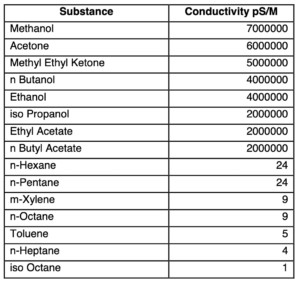
Like many safety professionals, I learned there is a HUGE difference in flammable liquids the HARD WAY. Having a strong background in fire/HAZMAT, even as an IFSTA instructor 20 years ago, I thought flammable liquids were all about flash points and LEL. To an emergency responder, that may work, but as a safety engineer responsible for a PSM/RMP-covered process containing non-conductive flammable...
Read More
Now here is why bonding and grounding falls well short of being all the precautions we need when transferring NON-CONDUCTIVE FLAMMABLE LIQUIDS. Bonding and grounding takes into account that we are equalizing the energy levels between the containers and therefore the static will not be released to the differently charged container. This works when it is DONE properly when we are transferring...
Read More
A Purdue University report showed 51 grain bin accidents last year, up from 38 in 2009 and the most since tracking began in 1978. Twenty-five people died, and five of them were children under the age of 16.
The previous record for grain bin accidents was 42 in 1993. The accidents prompted the OSHA to send letters this past week to 10,000-grain bin operators across the U.S., telling them they are responsible...
Read More
The National Board of Boiler and Pressure Vessel Inspectors has released the Violation Findings Fourth Quarter Report for 2010. The report is based on 65 reports from 38 jurisdictions, consists of 170,643 inspections with 17,201 violations. This is a 10% violation rate.
…
HomeRead More »
Read More