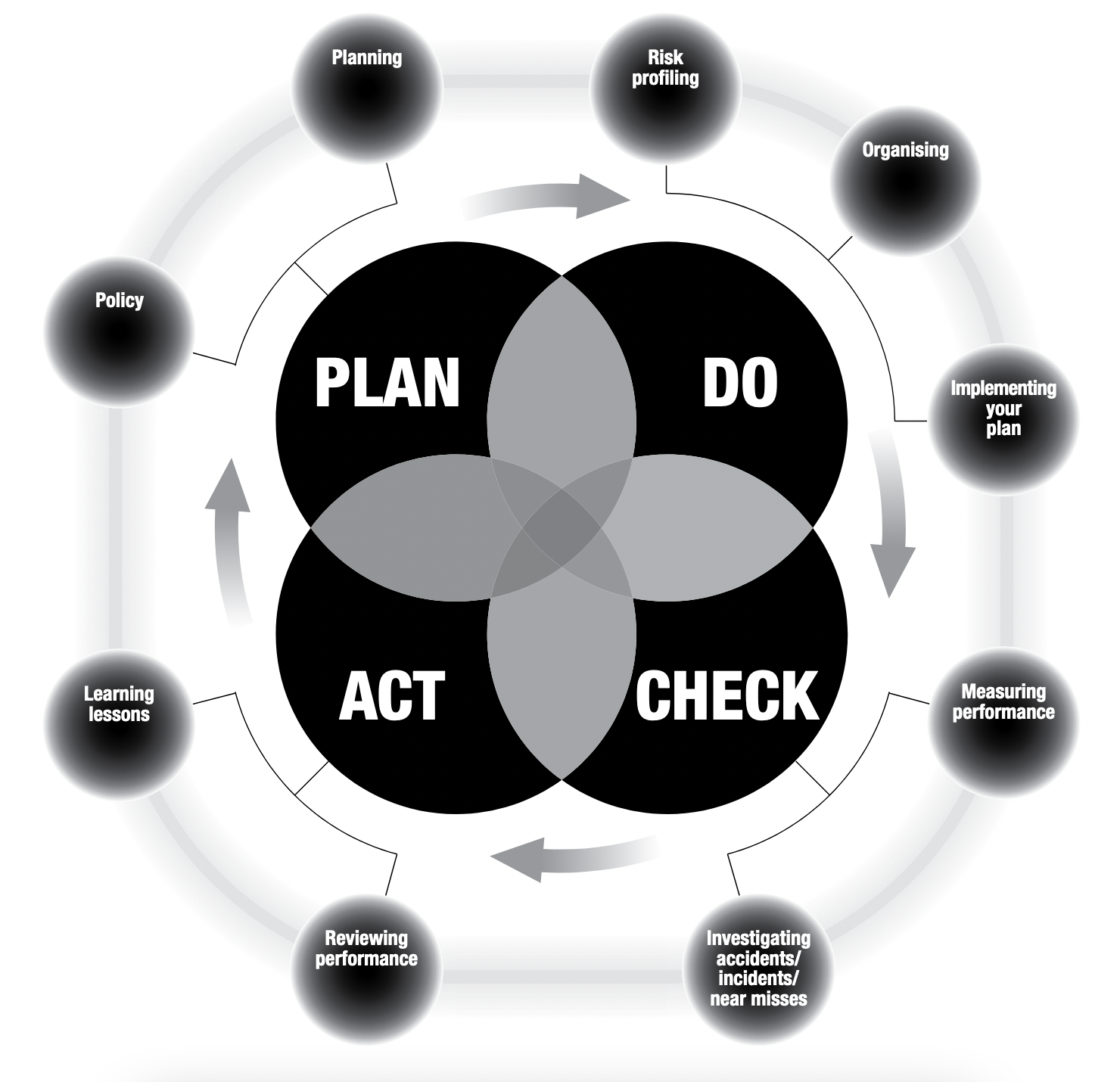
 I recently came across this depiction of the Plan-Do-Check-Act (PDCA) management model related to a Safety Management System. It is from our safety friends across the pond. Check it out, as well as their complete publication on the topic…
RISK PROFILING
Effective leaders and line managers know the risks their organizations face, rank them in order of importance, and take action to control them. The range of risks
goes beyond health and safety risks to include quality, environmental, and asset damage, but issues in one area could impact in another.
LEADING AND MANAGING FOR HEALTH AND SAFETY
Leaders, at all levels, need to understand the range of health and safety risks in their part of the organization and to give proportionate attention to each of them. This
applies to the level of detail and effort put into assessing the risks, implementing controls, supervising, and monitoring.
COMPETENCE
Competence is the ability to undertake responsibilities and perform activities to a recognized standard on a regular basis. It combines practical and thinking skills, knowledge and experience.
WORKER CONSULTATION AND INVOLVEMENT
At its most effective, full involvement of your workforce creates a culture where relationships between employers and employees are based on collaboration, trust, and joint problem-solving. Employees are involved in assessing workplace risks and the development and review of workplace health and safety policies in partnership with the employer
PLAN
- Think about where you are now and where you want to be
- Say WHAT you want to achieve, WHO will be responsible for what, HOW you will achieve your aims, and HOW you will measure your success. You may need to write down this policy and your plan to deliver it.
- Decide HOW YOU WILL MEASURE performance.
- Think about ways to do this that go beyond looking at accident figures; look for ACTIVE INDICATORS as well as reactive indicators.
- Consider fire and other emergencies.
- Co-operate with anyone who shares your workplace and coordinate plans with them.
- Remember to plan for changes and identify any specific legal requirements that apply to you.
DO
- Identify your RISK PROFILE
- ASSESS the risks, identify what could cause harm in the workplace, who it could harm and how, and what you will do to manage the risk
- Decide what the PRIORITIES are and identify the biggest risks
- Organize your activities to deliver your plan
In particular, aim to:
- INVOLVE WORKERS and communicate so that everyone is clear on what is needed and can discuss issues – develop positive attitudes and behaviors
- Provide adequate resources, including competent advice where needed
- Implement your plan
- Decide on the PREVENTIVE AND PROTECTIVE MEASURES needed and put them in place
- Provide the right tools and equipment to do the job and keep them maintained
- Train and instruct to ensure everyone is competent to carry out their work
- Supervise to make sure that arrangements are followed
CHECK
- Measure your performance
- Make sure that your plan has been implemented – ‘paperwork’ on its own is not a good performance measure
- Assess how well the risks are being controlled and if you are achieving your aims.
- Formal audits may be useful
- Formal audits may be useful
- Investigate the causes of accidents, incidents, or near misses
ACT
- Review your performance
- LEARN from accidents and incidents, ill-health data, errors, and relevant experience, including from other organizations
- Revisit plans, policy documents, and risk assessments to see if they need updating.
- Take action on lessons learned, including from audit and inspection reports
The full publication can be downloaded HERE