 Lots of talk about SIF (Serious Injuries & Fatalities) these days. It even has a new acronym some of you may have seen being used… STKY (Stuff [or Sh_t] That Kills You). Leave it to the safety profession to package this risk management approach into a “program” that can be marketed and sold as another silver bullet to fix all of our struggles. Hence, SIF has many catchphrases that marketing folks have come up with – which is insulting to me, but it seems to have worked! You may notice that many of the BBS companies are now SIF experts as well – it’s called a business and it destroys credibility in safety efforts.
But this approach to managing CATASTROPHIC risks by use of a Safety Management System (a 14-element SMS) is NOTHING new to many of us. We call it “process safety” and it has been an OSHA standard since 1992.
In process safety, we are focused on CATASTROPHIC hazards and risks; unlike what a traditional OSH SMS is focused on (e.g. chasing recordable injuries). For example, when we do a Process Hazard(s) Analysis (PHA) in process safety we are analyzing events that could lead to catastrophic consequences (e.g. LOPC event impacting multiple personnel). In the traditional OSH SMS we use a Job Hazard Analysis (JHA) to identify hazards that lead to lesser consequences (e.g. cut finger, back injury, etc.). This is NOT intended to make light of these lesser injuries, just that this SIF approach requires a different set of tools AND a true understanding of RISKS (e.g. frequencies and severities).
If you have been following injury trends in the USA, you have probably noticed that we have reduced our lesser injuries over time; however, we still see the news accounts of these larger consequence events. Some will say, this is only a “social media” impact bringing these events to more people’s attention. That may be true, but data tells us that SIF events are NOT declining at the rate of the lesser events. So we can’t let off on what we are already doing to PREVENT all incidents – we just need to consider those events that may be MUCH LESS LIKELY to occur; but when they do occur, the consequences will be far MORE SEVERE.
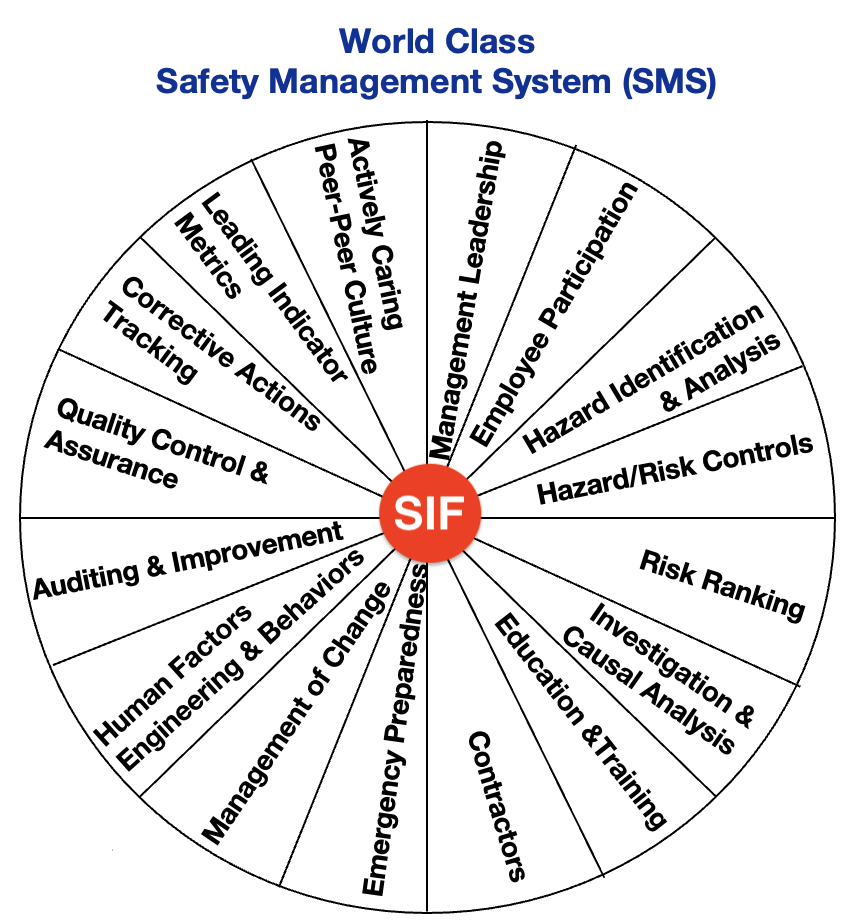
Shown here is my SMS model that I provide to clients who are in high-risk industries, but are not required to comply with OSHAs/EPAs process safety standard(s). Notice that every element revolves around the SIF approach. SIF is NOT a “program”, it does not have a beginning and an ending, and it does not sit on a shelf in a binder; rather it is HOW WE MANAGE our RISKS.
It is simply shifting focus and resources to those events that although they may be LESS FREQUENT, their CONSEQUENCE is more severe. It does NOT mean we stop caring about those lesser events! Heck, SIF is intended to use those lesser consequence events as LEARNING opportunities in how we can actually PREVENT the more serious events. We call these PSIF (Precursors) events and the value they provide is immeasurable.
There are four (4) basic steps to incorporate SIF into our SMS:
- EDUCATE the organization on the prevention of SIFs
- Everyone at all levels of the organization must be aware and alert to the fact that just managing injury rates is not enough
- The organization is still vulnerable to SIF exposures
- MEASURE SIFs and PSIFs as a KPI (rate)
- The SIF rate is the number of serious and fatal injuries—and recordable injuries with reasonable potential to be an SIF—divided by hours worked
- Data on the SIF rate should be gathered for the past 2-3 years and from this point forward
- The SIF rate must have high visibility throughout the organization
- DEVELOP and IMPLEMENT Safety Management System (SMS) elements to:
- IDENTIFY Hazards and SIF Precursors
- ANALYZE the Hazards and SIF Precursors
- ASSESS the level of RISK the hazards pose
- MITIGATE risks from hazards and SIF Precursors
- Embed findings from SIF assessments into existing safety management systems, including
- pre-task risk assessment/Permit-to-Work process,
- observation and feedback process(s), and
- incident investigations/Causal Analyzes
so these systems now address SIF Precursors
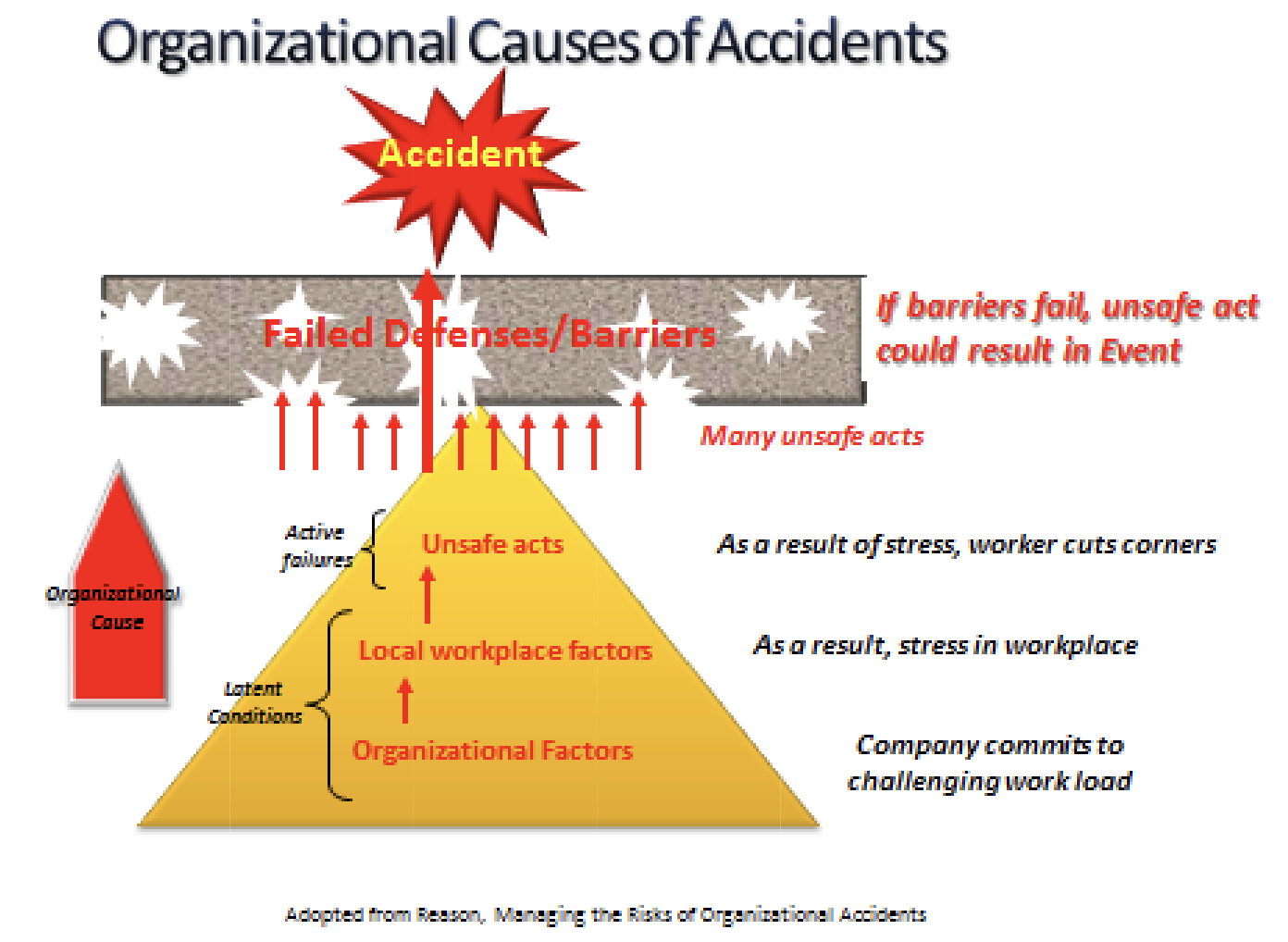
Go beyond obvious errors to find LATENT CONDITIONS that may represent SIF precursors (PSIFs)!
CLICK HERE to download my SIF introduction ppt