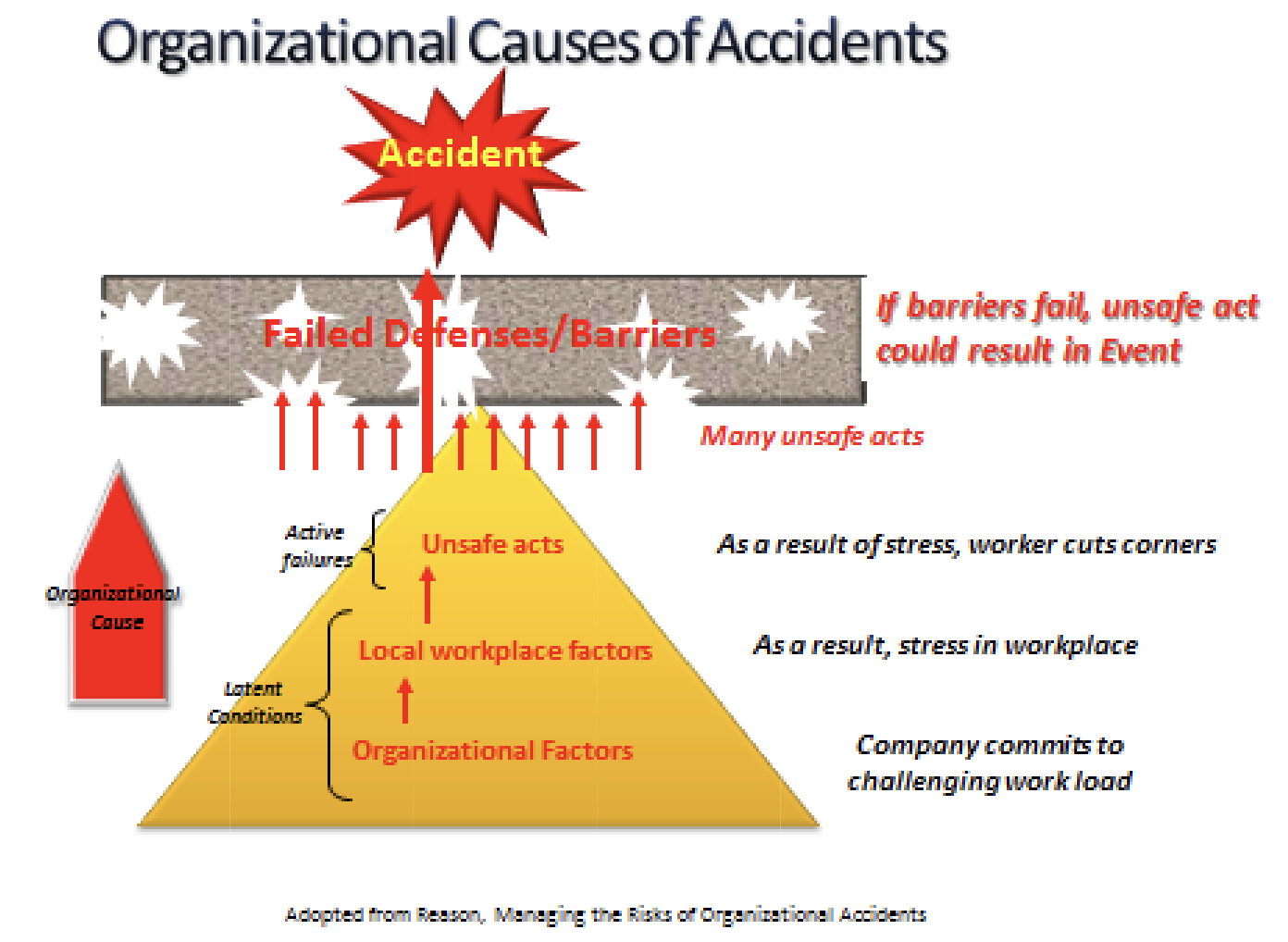
- Individuals avoid complacency and continuously challenge existing conditions and activities to identify hazards and discrepancies that might result in error or inappropriate action.
- All employees are watchful for assumptions, anomalies, values, conditions, or activities that can adversely affect safety.
Attributes:
Safety is Recognized as Special and Unique: Individuals understand that humans are complex and can fail in unpredictable ways.
Behavior Examples:
- The organization ensures that High-Risk activities are conducted with particular care, caution, and oversight.
- Individuals recognize the special characteristics and unique hazards of the railroad industry.
- Individuals recognize the particular importance of features designed to maintain critical safety functions.
- Executives and senior managers ask probing questions to understand the implications and consequences of anomalies in working conditions.
- Executives and senior managers challenge their teams to ensure that working conditions are fully understood and appropriately resolved, especially equipment important to transportation safety.
Challenge the Unknown: Individuals stop when faced with uncertain conditions. Risks are evaluated and managed before proceeding.
Behavior Examples:
- Executives and senior managers reinforce expectations that individuals take the time to do the job right first, seek guidance when unsure, and stop if an unexpected condition or equipment response is encountered.
- Individuals maintain a questioning attitude during pre-job briefings and job-site reviews to identify and resolve unexpected conditions.
- Individuals communicate unexpected conditions to their managers.
- Individuals stop work activities when confronted with an unexpected condition, communicate with supervisors, and resolve the condition prior to continuing work activities. When appropriate, individuals can consult subject matter experts.
- If a procedure or work document is unclear or cannot be performed as written, individuals safely stop work until the issue is resolved.
Challenge Assumptions: Individuals challenge assumptions and offer opposing views when they think something is not correct.
Behavior Examples:
- Executives and senior managers encourage an atmosphere where individuals feel comfortable soliciting challenges to assumptions when evaluating safety issues.
- Individual contributors ask questions to fully understand the bases of operational and management decisions that appear to be contrary to safety.
- Executives and senior managers question assumptions, decisions, and justifications that do not appear to consider impacts to safety sufficiently.
Avoid Complacency: Individuals recognize and plan for the possibility of mistakes, latent problems, and inherent risk, even while expecting successful outcomes.
Behavior Examples:
- The organization is aware that latent conditions can exist, addresses them as they are discovered, and considers the extents of the conditions and their causes.
- Prior to authorizing work, individuals verify procedure prerequisites are met rather than assuming they are met based on general working conditions.
- Individual contributors thoroughly review the work site and the planned activity EVERY TIME work is performed rather than relying on past successes and assumed conditions.
- Leaders ensure specific contingency actions are discussed and understood during job planning and pre-job briefings.
- Individuals consider potential undesired consequences of their actions prior to performing work and implement appropriate error reduction tools.
Adapted from: INPO Pocket Guide to INPO 12-012: Traits of a Healthy Nuclear Safety Culture