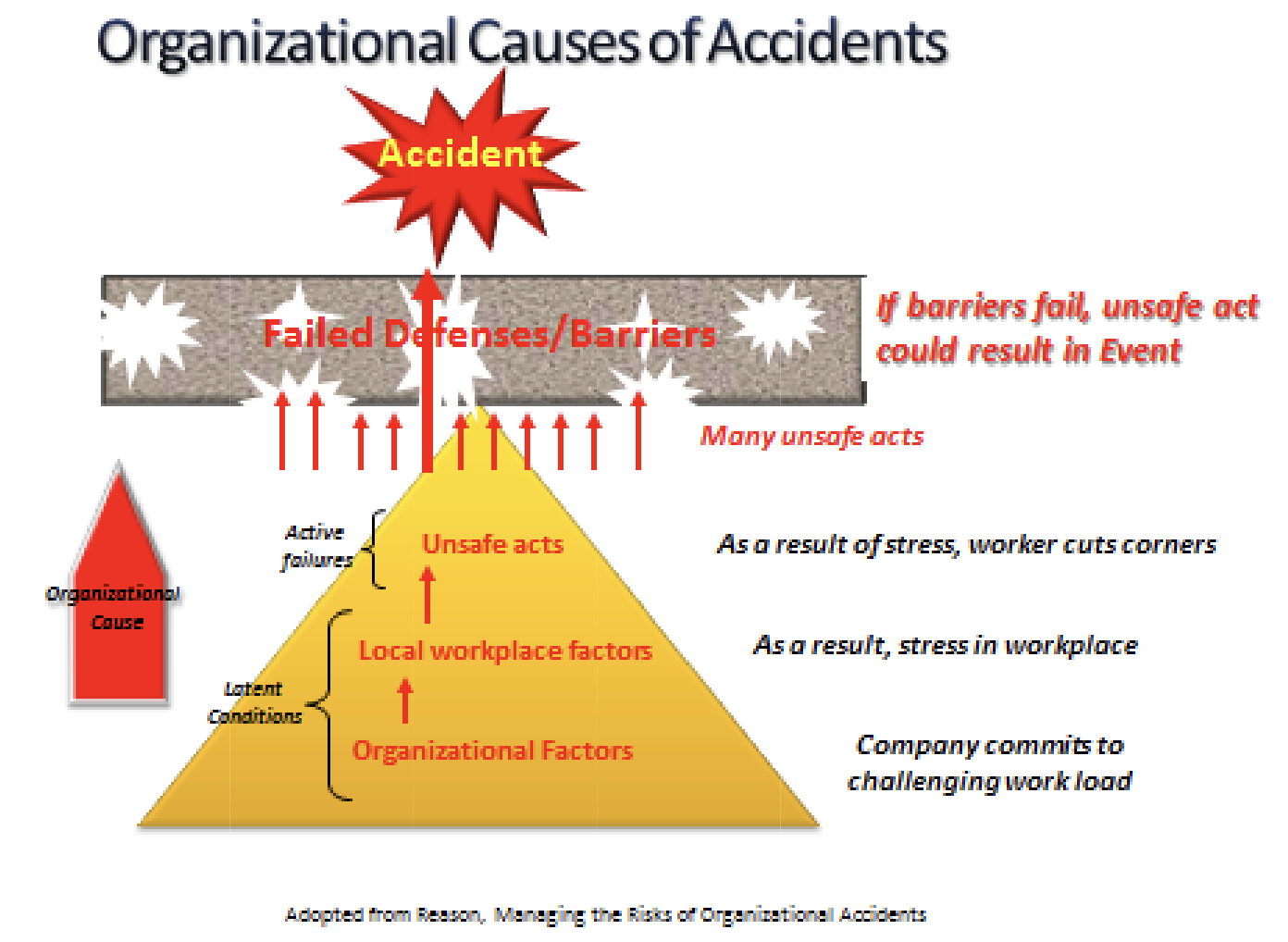
Reason (1997) has identified a number of characteristics that go to make up such a safety culture. These are:
- INFORMED CULTURE – one in which those who manage and operate the system have current knowledge about the human, technical, organizational, and environmental factors that determine the safety of the system as a whole,
- REPORTING CULTURE: a culture in which people are willing to report errors and near misses,
- JUST CULTURE: a culture of “no blame” where an atmosphere of trust is present and people are encouraged or even rewarded for providing essential safety-related information – but where there is also a clear line between acceptable and unacceptable behavior and,
- FLEXIBLE CULTURE – which can take different forms but is characterized as shifting from the conventional hierarchical mode to a flatter professional structure.
- LEARNING CULTURE – the willingness and the competence to draw the right conclusions from its safety information system, and the will to implement major reforms when the need is indicated.
The values associated with a safety culture are fairly straightforward. The beliefs are more complex. Taken together the five characteristics form a culture of trust and of informedness. Trust is needed, especially in the face of assaults upon the beliefs that people are trying their best, such as accidents and near-miss incidents which all too easily look like failures of individuals to come up to the ideals of the organization. Informedness means that people know what is really happening, lessening the chance of mistakes caused by inappropriate world views. This helps us to identify what beliefs are associated with a safety culture. Table 2 places safety into the framework set in Table 1. Reason’s characteristics are the outcome of corporate behaviors driven by the static and dynamic components of the corporate culture, but mostly by beliefs and behaviors rather than values. Organizations with high values may not live up to their own expectations.
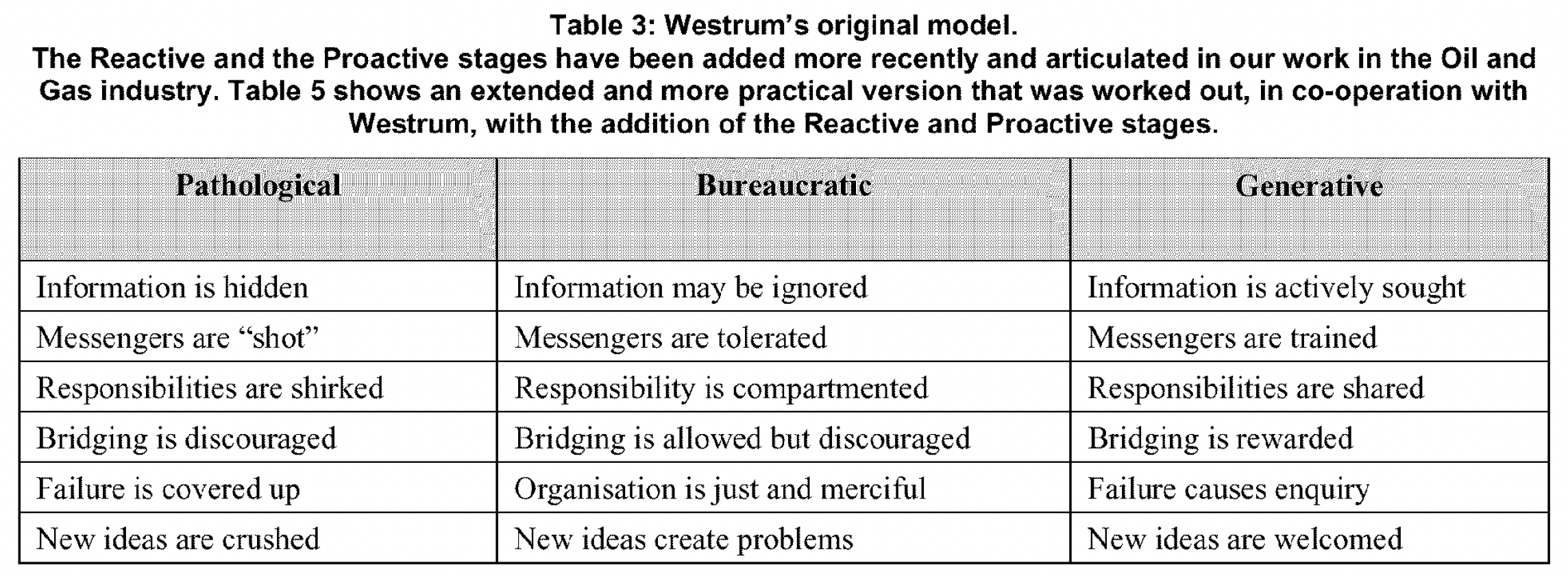
Source: Safety Culture – Theory and Practice, Patrick Thomas William Hudson – Leiden University, 2001