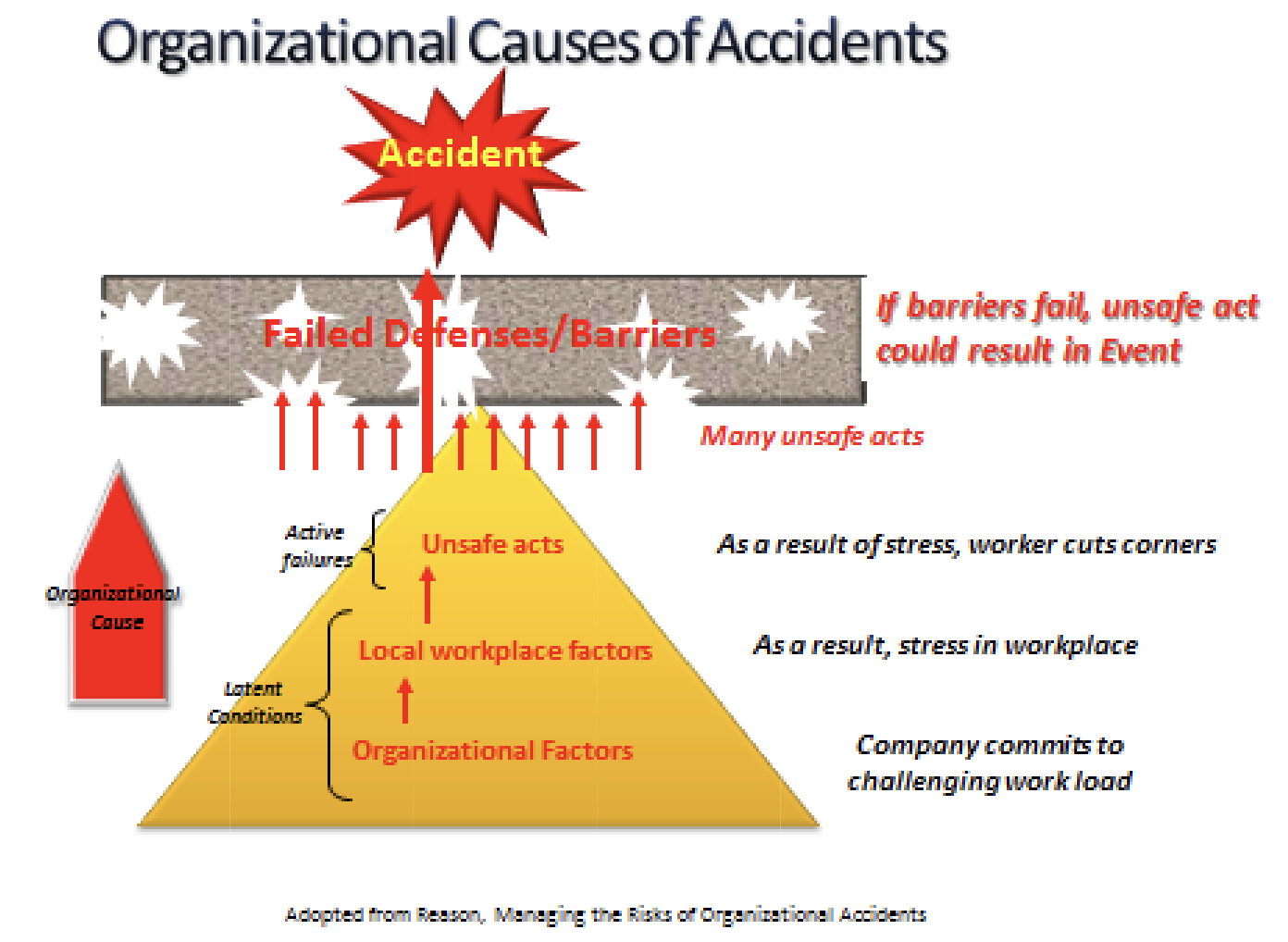
Well-tested systems relying on in-depth defenses and supported by procedural requirements will protect employees and the public from OSH hazards. It is easy, therefore, for the workforce to develop the attitude that safe conditions are provided for them by others and that events at other plants are exceptional and isolated and could not occur at their plant. It is, therefore, essential that everyone connected with safety is constantly reminded of the potential consequences of failing to give safety absolute priority. Most incidents and accidents have occurred because someone has failed to take the relevant precautions or has failed to consider or question conservatively the decisions they have made or the steps are taken to implement them.

In practice, there must be a requirement for each individual or team to stop and review safety before starting a piece of work or beginning to carry out a procedure. Various techniques have been developed, including the STAR (stop, think, act, review) principle. They all have one feature in common: the need to be conservative in safety-related matters by staff checking their understanding of a situation (and, if necessary seeking more information or advice) and by assuming that the worst could happen.
Taking a conservative course of action is not always easy, particularly when there are operational pressures, and this is when an organization’s priorities have to be clear and genuinely accepted. To develop and reinforce this culture, employees should be praised if they stop work or do not approve modifications because there is reasonable doubt about the safety implications.
The following questions may help to clarify whether such conservative decision-making is genuinely encouraged and consistently applied:
- Is there a simple, well-understood process to promote conservative decisions? For example, in appropriate circumstances, are staff encouraged to put in writ-
ing the basis for their course of action? - Are they encouraged to consult experts about unexpected developments?
- Are personnel encouraged to take advice or to seek more information when they have doubts about safety?
- Can evidence be cited that this happens in practice?
- When conservative decisions are appropriately taken (such as stopping work for good safety reasons), is this visibly supported by senior managers?
Adapted from:
KEY PRACTICAL ISSUES IN STRENGTHENING SAFETY CULTURE
A report by the International Nuclear Safety Advisory Group