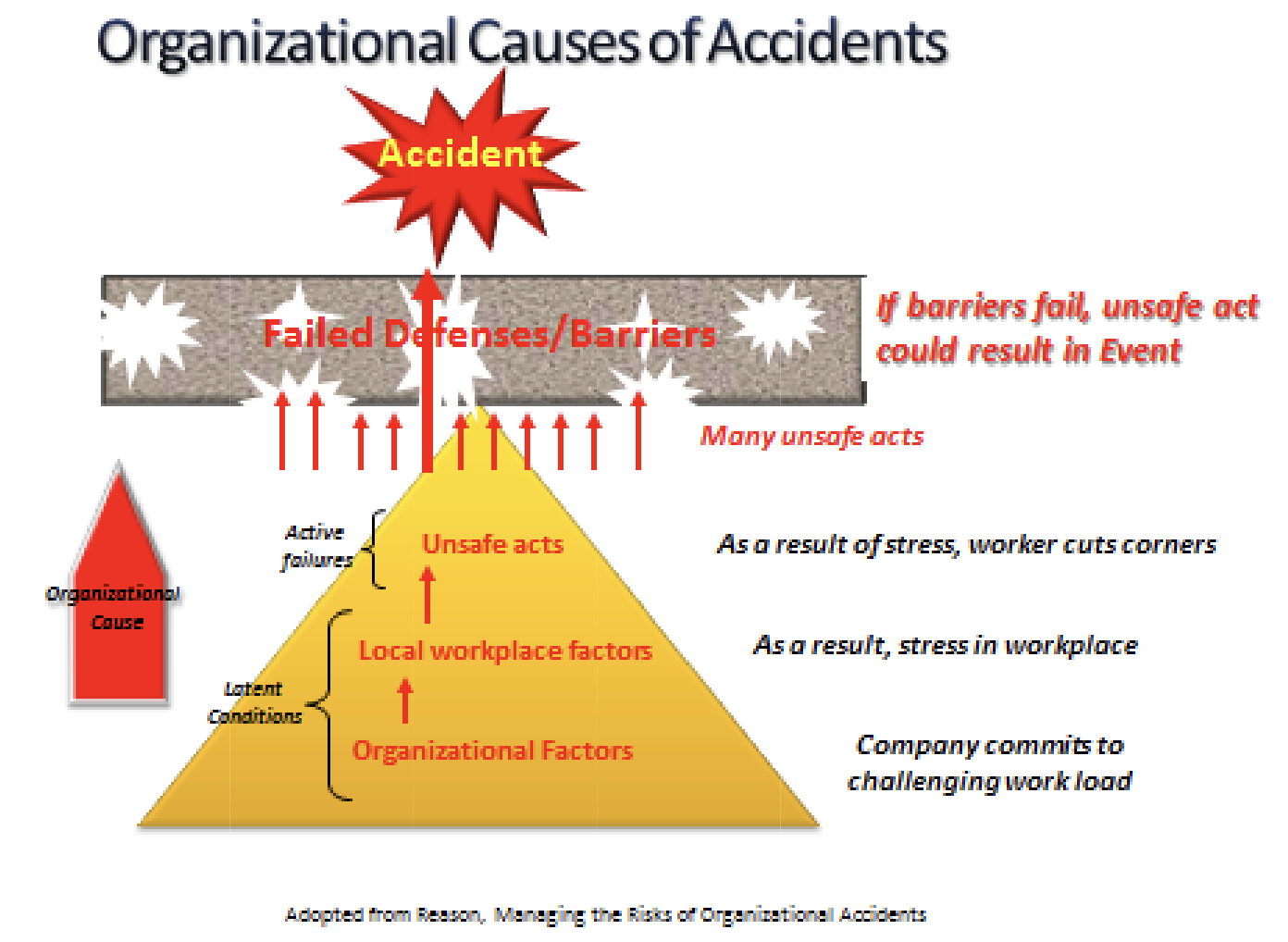
- Communications focus on safety as a company value rather than a priority.
- Safety communication is broad and includes Service Unit-level communication, job-related communication, worker-level communication, equipment labeling, operating experience, and documentation.
- Leaders use formal and informal communication to convey the importance of safety being a personal value.
- The flow of information up the organization is as important as the flow down the organization.
Attributes:
Work Process Communications: Individuals incorporate safety communications in work activities.
Behavior Examples:
- Safety-related communications within work groups are timely, frequent, and accurate.
- Work groups and supervisors communicate work statuses with other work groups and supervisors during the performance of their work activities.
- Individuals communicate with each other such that everyone has the information necessary to accomplish work activities safely and effectively.
- Communications during shift turnovers and pre-job briefings provide information necessary to support safety.
- Workgroups integrate safety messages into daily activities and meetings.
Bases for Decisions: Leaders ensure that the bases for operational and organizational decisions are communicated promptly.
Behavior Examples:
- Leaders promptly communicate expected outcomes, potential problems, planned contingencies, and shutdown criteria for important operational decisions.
- Leaders share information on various issues with individuals and periodically verify their understanding of the information.
- Leaders avoid unintended or conflicting messages that operational decisions may convey.
- Leaders encourage individuals to ask questions if they do not understand the basis of an operational or management decision.
- Executives and senior managers communicate the reasons for resource allocation decisions, including the safety implications of those decisions.
Free Flow of Information: Individuals communicate openly and candidly, up, down, and across the organization and with oversight, audit, and regulatory organizations.
Behavior Examples:
- Leaders encourage the free flow of information.
- Individuals share information openly and candidly.
- Leaders respond to individuals in an open, honest, and non-defensive manner.
- Individuals provide complete, accurate, and forthright information to oversight, audit, and regulatory organizations.
- Executives and senior managers actively solicit feedback, listen to concerns, and communicate openly with all individuals.
- Leaders candidly communicate the results of monitoring and assessments throughout the organization and with independent oversight organizations.
Expectations: Leaders frequently communicate and reinforce the expectation that safety is a company value (not just a priority).
Behavior Examples:
- Executives and senior managers communicate expectations regarding safety so that individuals understand that safety is a company value (not just a priority).
- Executives and senior managers implement a strategy of frequent communication using various tools to reinforce that safety is a company value (not just a priority).
- Executives and senior managers reinforce the importance of safety by clearly communicating its relationship to strategic issues, including a budget, workforce planning, equipment reliability, and business plans.
- Leaders communicate desired safety behaviors to individuals, providing examples of how behaviors positively or negatively affect safety.
- Leaders routinely verify that communications on the importance of safety have been heard and understood.
- Leaders ensure supplemental personnel understands expected behaviors and actions necessary to maintain safety.
Adapted from: INPO Pocket Guide to INPO 12-012: Traits of a Healthy Nuclear Safety Culture