











In many PSM/RMP covered facilities we have two different ASME B31 sections applying to different piping and in our work we see a lot of facilities asking…
Why does it matter which ASME B31 section I apply to my piping circuits?
For example, the plant has an industrial boiler and in that application, they correctly use B31.1, Power Piping for their steam piping. But in their chemical processes,...
Read More
An incident involving PLASTIC sulphuric acid piping at a gas plant. Two workers were operating valves on a 1″ polyvinyl chloride (PVC) drain line so they could transfer sulphuric acid from a storage tank. They were
following a written procedure,
had held a tailgate meeting to discuss the hazards and emergency procedures, and
had all necessary personal protective equipment for the task.
The...
Read More
In response to the tragic 2017 incident in which several people were killed by exposure to ammonia at an ice arena in Fernie, British Columbia, ABSA is now extending the scope of the plant registry to include ammonia refrigeration plants and they just published new guidance and establishes requirements for the ammonia-bearing refrigeration systems operating in Alberta. This new guidance was issued...
Read More
This is a MUST read for those of us in the process safety arena…
OPEN to everyone as this is from ABSA – the pressure equipment safety authority
…
HomeRead More »
Read More
Here is a listing of just some of the Loss of Primary Containment (LOPC) events involving pressure equipment unsafe conditions, accidents, and fires that have been reported to and investigated by ABSA. This information is provided to make people aware of the general nature of pressure equipment unsafe conditions, accidents, and fires. The intent is to heighten the awareness of the general...
Read More
All of these news outlets claiming the CDC is recommending “double masking” is the media, once again, not knowing their ass from a hole in the ground when it comes to respiratory protection. In fact, yesterday the CDC announced they have begun a study to determine if double masking is more effective and by how much more. They even mentioned the word “science” in their statement. So Dr.’s can get on...
Read More
In May 2020 I wrote Part I – General Requirements after OSHA issued two willful and three serious violations totaling $122,602 to a sperm bank for bulls (cattle) after an employee was asphyxiated while filling freezers with Liquid Nitrogen. And back in 2017, we saw another sperm bank, this one for humans, have a Nitrogen incident that claimed the life of a Deputy Sheriff and critically...
Read More
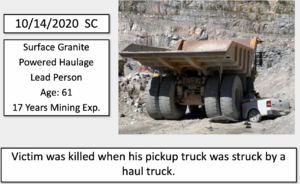
Here is a nice ppt from MSHA showing their 2020 fatality cases. SAFTENG members can download the ppt.
…
HomeRead More »
Read More
I do not write a lot about Electrical Safety-Related Work Practices (ESRWP) as I tend to leave this area of safety to those who specialize in it. But as safety professionals, we MUST be trained in these safety practices so as to ensure our workers are being protected by following these ESRWPs. The #1 failure of our electrical safety efforts centers around “live-work” and just...
Read More
From NFPA’s 2021 70E Factsheet…
Article 110: Some requirements in Article 110 have been reorganized for a more logical progression, including moving general principles of lockout/tagout from Section 120.2 and general principles of an electrically safe work condition and energized work requirements from Section 130.2.
New subsection 110.5(K) REQUIRES that an employer’s electrical...
Read More
by Roger F. Evans CSP, CHMM, SGE
Often times you will hear stories of “centurions” citing specific lifestyles and/or attributes they believe have contributed to their longevity. Their stories are often quite interesting. They will talk about their diet, work habits, exercise scheme, family life, and their own personal secrets to their longevity, etc.
In the same manner, there...
Read More