











Those that follow my PSM & RMP Citations / Analysis postings most likely have noticed a significant change in the level and depth that EPA and OSHA are conducting their RMP and PSM inspections. They have cited many more RAGAGEP issues and now dig deep into PHA’s and SOP’s than they ever had before. This all came about from the National Compliance Initiative: Reducing Accidental...
Read More
A bit of advice for some of you younger safety pro’s that I learned from my very first plant manager, who by the way was the kind of plant manager every young and inexperienced safety engineer needs out of school! Claude Bloom was a “people manager” who just happened to also run a chemical plant so we called him a plant manager. He was wise beyond a normal man, with advanced...
Read More
Under a new Illinois state regulation, 8 IAC 215, anyone who works on a farm and handles anhydrous ammonia must complete Certified Grower Training by April 2022 and do a refresher course every three (3) years thereafter. This includes those workers who are either classified as a “Certified competent attendant” or a “Certified grower” as defined below:
“Competent attendant”...
Read More
This week we will see a new administration take over the reins in D.C., and after four tumultuous years under President Trump for OSHA and the CSB, we stand to see some serious shifting in both agencies. OSHA has had a “wish list” ever since the last year of the Obama Administration, which some got implemented, and some of that got overturned in courts. With the Trump Administration’s...
Read More
Respondent is the owner and/or operator of a Refinery that uses, handles, and/or stores more than a threshold quantity of Flammable Mixture and Hydrogen fluoride/Hydrofluoric acid, which are regulated substances, as specified at 40 C.F.R. §§ 68.115 and 68.130. From August 15 to August 18, 2016, authorized representatives of the EPA conducted an inspection of the Facility to assess compliance with section...
Read More
I usually do not post such small cases, but this 540-megawatt electrical generation facility is sort of unique as it uses 87,840 pounds of anhydrous ammonia in a closed refrigeration system used to cool gas turbine inlet air and increase power output. It also uses 44,840 pounds of aqueous ammonia to reduce NOx emissions by injecting ammonia vapor into an SCR. These two (2) processes also have...
Read More
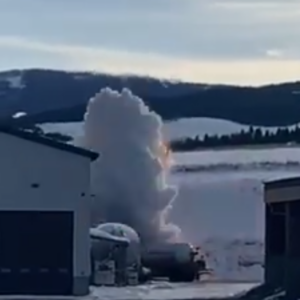
Since my post earlier this week I have received several comments and questions as to whether this “explosion” was in fact a Boiling Liquid Expanding Vapor Explosion. So I took the video and did a frame-by-frame examination of the event and I can say without question this was a classic BLEVE event. As we can see in this pic, we see the large and rapid expansion of vapor immediately...
Read More
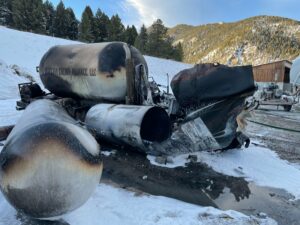
On January 6, 2021, at 2:30 PM the Big Sky fire Department was dispatched to a concrete batch plant for a vehicle fire that was reported to have spread to a large commercial structure. While en route to the incident responders were notified that there had been an explosion and that a propane truck was involved.
Upon arrival, responders found a propane truck with the cab fully involved. There was also...
Read More
A contractor was performing rust corrosion removal and prevention services on pressurized piping at a chemical plant in Freeport, Texas. In October 2016, two contractor employees were seriously injured when a pipe ruptured, releasing trichlorosilane. Following an inspection, OSHA issued the contractor a two-item serious citation. The first item, grouped for penalty purposes, alleges violations of the...
Read More
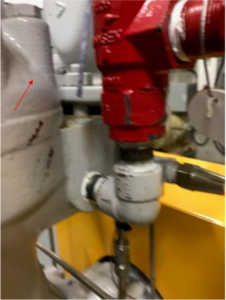
A major plant upgrade to the ammonia refrigeration machinery room was completed in September 2019. This upgrade included new:
compressors
heat exchangers
pressure vessels
pressure piping
controls
The refrigeration system was in operation for 3 months and on January 4, 2020, @ 0800 the shift engineer observed a reading of 12 ppm on the ammonia leak detector monitor.
…
HomeRead More &raq...
Read More
This is OSHA’s HAZWOPER (1910.120) Inspection Activity for their 2020 Fiscal year (October 2019 through September 2020). I have broken down the data by # of Citations, # of Inspections, Penalty $’s, and NAICS Industry Classification. As you can see, OSHA issued 38 citations from 19 inspections for a total of $130,373 in fines. Here is a quick breakdown of the activity:
Animal...
Read More
This is OSHA’s Respiratory Protection (1910.134) Inspection Activity for their 2020 Fiscal year (October 2019 through September 2020). I have broken down the data by # of Citations, # of Inspections, Penalty $’s, and NAICS Industry Classification. As you can see, OSHA issued 2,408 citations from 1,018 inspections for a total of $4,267,147 in fines. Here is a quick breakdown...
Read More