











With last week’s horrible tragedy in GA involving liquid nitrogen, I have received a number of inquires about what actually happens when a liquid cryogenic, such as Nitrogen, makes contact with someone’s skin. And this video probably does as good of a job as any “official” training video.
PLEASE REMEMBER, these chemicals are EXTREMELY DANGEROUS and NONE of the things you...
Read More
Let’s face it, the “green movement” is here to stay and in some situations, going green may be great for the environment, but sometimes this “going green” can introduce significant hazards in our workplaces. Hydrogen is becoming the last hydrocarbon fuel source of the “green movement” if you’re not going solar. Hydrogen is a GREAT FUEL, as...
Read More
Most insurers these days require this type of management program, although they may be called something else. The idea is that BEFORE a fixed system is removed from service, someone will notify the insurer about the removal from service. The insurer will then require a host of actions to be taken during the time the system is out of service, most notably- NO HOT WORK is permitted in the area, as well...
Read More
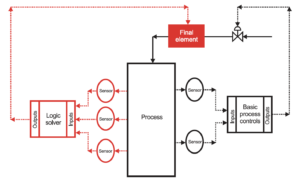
It is the year 2021 and OSHA’s Process Safety Management standard will be 29 years old this May. Most processing facilities have come a long way in improving their process safety, but most still lack a comprehensive WRITTEN management program for their Safety Controls, Alarms, and Interlocks (SCAI). These safety instrumented systems (SIS) play a critical role in almost all of the...
Read More
The gaps in the defense arise for two reasons – active failures and latent conditions – occurring either singly or in diabolical combinations. They are devilish because, in some cases, the trajectory of accident liability needs only exist for a very short time, sometimes only a few seconds:
…
HomeRead More »
Read More
We knew this was coming; I have been writing about it for several years and what we should expect with this revision. SAFTENG members can read what this HAZCOM revision could do to the PSM standard and Flammable Liquids standard.
If OSHA adopts Part 2 of the UN’s GHS, what will Flammable Gases look like? …
Process Safety is blowing in the political winds (GHS and Flammable Gas...
Read More
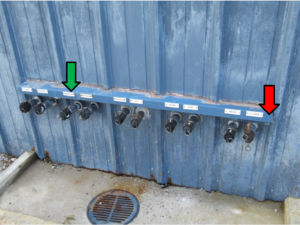
The photograph shows the fill line hookups at TCWTP.
All connections and fittings were identical, and the hoses used by ADC could be hooked up to any of the fill lines pictured.
There was also no color coding of the lines or prominent labeling other than plain black text on a white background.
The fill lines were not locked when not in use to prevent accidental hookups.
The FSA hookup...
Read More
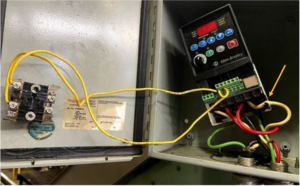
We should NEVER accept damaged electrical wires – EVEN when they are inside an electrical cabinet! Case in point…
A 30-year-old male employee was troubleshooting an issue with an injection molding machine and apparently was electrocuted when he contacted the frame of the loading conveyor. The company is a manufacturer of injection-molded, polyvinyl chloride (PVC) schedule 40 and schedule...
Read More
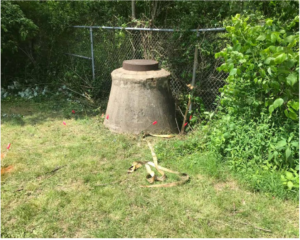
A 38-year-old male employee was overexposed to hydrogen sulfide (or possibly an oxygen-deficient atmosphere) while inside a manhole. A second employee tried to rescue the victim but was also overcome. The second employee was rescued by an employee of the Waste Water Treatment facility. The two-man crew had been hired by the Waste Water Treatment Plant to clear a blocked sewer line. They were going...
Read More
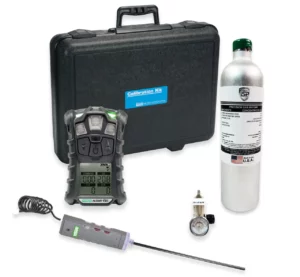
If you have attended any of my Process Safety, HAZMAT/ER, or PRCS courses over the years, you will certainly recognize this hazard evaluation methodology. I learned this method even before I learned the Process Hazards Analysis (PHA) methods. The method I will discuss in this post is one that we should all use when a business wishes to bring on-site a new/different hazardous material. ...
Read More
To be blunt, the 2021 IFC does NOT require fire extinguishers on PITs (e.g., forklifts). The revision to the 2021 IFC merely gives storage (S) occupancies a NEW option for providing fire extinguishers. The new option is that when the S occupancy can meet certain requirements (as shown and explained below) they can put fire extinguishers on their PITs rather than the traditional approach of mounting...
Read More
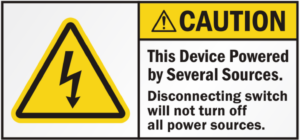
Scenario: A piece of equipment has twelve (12) energy sources, which must be isolated to get the piece of equipment down to a zero energy state (ZES). I have a task that will expose me to ONLY 1 of these 12 energy sources – can I just lockout the one (1) source or must I lockout all twelve (12) each time I perform this task?
This scenario is one that happens just about every hour...
Read More