







Respondent operates an ammonia refrigeration system which uses 30,345 pounds anhydrous ammonia (ammonia). Respondent has one RMProgram level 3 covered process, which stores or otherwise uses an extremely hazardous substance in an amount exceeding its applicable threshold of 10,000 pounds. On December 21, 2017, the EPA conducted an onsite inspection of the RMProgram related records and equipment for...
Read More
CAUTION: This interim order is specific to the facility requesting it. Do NOT use these measures at your facility!!!
If I had a nickel for every time I have heard the excuse… “its more dangerous to do these isolations than it is to do the entry with lesser isolations,” I would not be writing this article instead, I would be on my yacht deep-sea fishing somewhere off the...
Read More
At 7:00 p.m. on December 4, 2019, an employee was working at a machine shop. He was operating a CNC (computer numerical control) lathe to machine material. The machine was equipped with an interlock system. The interlock system was supposed to prevent the lathe from functioning if its door was open; however, the interlock system had been bypassed. The narrative did not say who had performed this...
Read More
Respondent is the owner and/or operator of a meat processing facility that uses, handles, and/or stores more than a threshold quantity of anhydrous ammonia. Respondent is required to prepare and implement an RMP to detect and prevent or minimize accidental releases of such substances under section 112(r)(7) of the CAA. Respondent meets the Program 3 eligibility requirements under 40 C.F.R. § 68.10. ...
Read More
The Transportation Safety Board of Canada (TSB) has released its investigation report (A19O0063) into the May 2019 collision between a fuel truck and a plane at Toronto/Lester B. Pearson International Airport, Ontario. The investigation highlights the importance of passengers familiarizing themselves with safety information and following instructions from flight attendants during emergencies.
On 10 May 2019,...
Read More
The DOT ERG identifies chemicals as being shipped “inhibited” or “stabilized” and have a “P” listed with their guide number meaning that the chemical can polymerize. These inhibitors are TIME and TEMPERATURE dependent! The inhibitors can be tested and more inhibitor added if necessary, albeit VERY RISKY once the reaction has begun AND the fact that these inhibitors are not something First Responders...
Read More
Both of these tools are necessary in the process safety arena; however, they have very different and distinct roles in process safety management. In my career I found it best to perform the PHA first and based on the deviations identified in the PHA, we would write our SOPs to cover those deviations. And of course, every SOP gets written from a JSA/JHA. It works like this…...
Read More
UPDATED on 4/4/24 with 2024 ERG Info
This week we saw the official release of the 2020 Emergency Response Guide (ERG) from DOT/PHMSA and along with this 2020 update came some clear distinctions between a “Heat Induced Tear” (HIT) and a Boiling Liquid Expanding Vapor Explosion (BLEVE).
(emphasis by PHMSA)
A Heat Induced Tear (HIT) is a rupture of a NON-PRESSURE tank car containing...
Read More
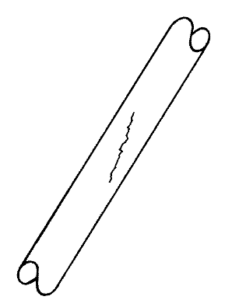
Yes… here we go again! If we wish to claim an Excess Flow Valve as a “layer of protection” against a hose/pipe failure, we then MUST ensure the device is SIZED properly, INSTALLED properly, OPERATED properly, and MAINTAINED properly. This is what is called process safety management and for the life of me, I just can’t understand this out-of-sight = out-of-mind concept,...
Read More
The Emergency Response Guidebook (ERG) 2020 is finally here! We’ve listed the most important changes from the 2016 edition to the 2020 edition. They’re listed based on the color of their section in the guidebook.
White Pages:
…
HomeRead More »
Read More
On or about January 11, 2020, employees engaged in performing cleaning and maintenance on a heater treater system with a combustible engine power washer within range of flammable material stored within the heater treater were exposed to burn hazards.
…
HomeRead More »
Read More
I am going to guess that the facility’s inventory was less than 10,000 pounds of Propylene as OSHA issued no PSM citations, only a HAZCOM training citation and a GDC citation for four (4) issues they found with how the flammable gas was managed. Another incident showing OSHA’s weakness with “flammable gases”; they NEED a flammable gas standard similar to their LPG standard...
Read More