






In 2017 and 2019 I wrote about these Nitrogen Stabilizers and how their introduction into a PSM/RMP covered process would require a MOC and PSSR and I broke down the potential concerns and questions regarding these additives. Now it seems there may be a Mechanical Integrity twist to the use of these additives, as Transport Canada has issued a Safety Advisory about using additives with anhydrous...
Read More
OSHA published a Letter of Interpretation making it clear that we can use “alternative entry” methods such that when the physical hazard(s) can be ELIMINATED OR ISOLATED through engineering controls, AND any atmospheric hazards can be CONTROLLED through forced-air ventilation and continuous atmospheric monitoring, the space may be entered using the alternate procedures set forth in 29 CFR...
Read More
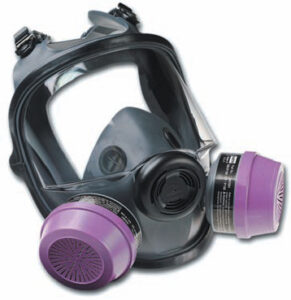
Most have seen a full-face Air Purifying Respirator (APR), but just so we are on the same page, I have shared an image of a FF-APR. The serious question I have is…
Can this FF-APR be equipped with “escape only” cartridges and be declared an emergency escape respirator?
I so NO, but I will be darned if I can find any agency or manufacturer that says NO. Here are my...
Read More
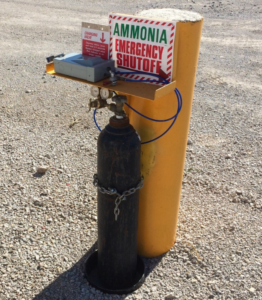
In the past 2-3 years, I have begun seeing Anhydrous Ammonia systems that claim to be built to ANSI K61.1 or CGA 2.1, but somehow these processes do not have the Emergency Shutdown Systems required by these two Recognized and Generally Accepted Good Engineering Practices. So with the help of the Illinois Fertilizer & Chemical Association, I thought it would be helpful to straighten out the...
Read More
My previous article on the Anhydrous Ammonia requirements generated a lot of questions, mostly about how OSHA worded their requirements when it came to Excess Flow Valves, Check Valves, Unloading, and Emergency Shutoff Valves. So this posting I used one of my favorite sources, WA States LNI standards, to present the material in a more straight forward manner. I am just covering the non-refrigerated...
Read More
This article is being posted in my Hazardous Materials section rather than the Process Safety section because the vast majority of my finds regarding the lack of proper design are almost exclusively in processes that have less than 10,000 pounds. I am hoping that those who read this will understand that what I am going to discuss in this article has absolutely nothing to do with being a PSM/RMP...
Read More
At 12:45 a.m. on December 28, 2019, Employee #1 entered a tanker truck that last held Vinyl Acetate Polymer Residue, a hazardous waste material, and became unresponsive while in the tanker. Employee #2 and Employee #3 entered the tank to rescue Employee #1 and also became unresponsive. Employee #4 entered the tank and was able to rescue Employee #2 but exhibited symptoms of chemical exposure. Emergency...
Read More
In several of my articles over the years, I have touched on the additional hazards when working with hazardous materials in an elevated position. In my 2016 Line Break presentation @ ASSE Safety 2016, we made a special point to mention how additional safeguards need to be in place when doing line breaks at elevation. In this 2020 fatality, we now know the deceased was working from a scissor...
Read More
The primary focus of the Emergency Response standard would be to protect workers who respond to emergencies as part of their regularly assigned duties. Examples include:
fire brigades/workplace emergency response teams,
industrial and municipal firefighters,
technical rescuers,
emergency medical service providers, etc.
A secondary focus of the rule would be to protect those workers who may be called...
Read More
Several of the EEBA manufacturers do not offer this advice upfront, but some manufacturers put this info in their owner’s manuals. I am no lawyer, so I have no idea why a manufacturer would NOT provide this information for an Emergency Escape Breathing Apparatus (EEBA). But having these devices in the workplace, if you use one of these brands, the facility’s RP must cover this...
Read More
What is the number 1 battle we deal with in our respirator programs? Facial hair! But luckily an Emergency Escape Breathing Apparatus (EEBA) is not hindered by facial hair; however, an EEBA could be hampered by…
…
HomeRead More »
Read More
Emergency Escape Breathing Apparatus (EEBA) are making come back – at least I am finding more and more facilities that never had them now implementing them for many reasons. Some companies now believe they are required because of PSM/RMP, some 3rd party PHA facilitators must be getting kick-backs as a lot are recommending them in their PHA’s, and I have even seen OSHA negotiate their...
Read More