










DESCRIPTION
Ammonia compressor seal failure
INCIDENT OVERVIEW
An intermittent compressor shaft seal leak resulted in multiple ammonia releases which activated low level (<50 ppm) ammonia detector alarms.
The premises were not evacuated as the release was contained in a well ventilated mechanical room and the detector did not initiate a high-level evacuation alarm.
…
HomeRead More...
Read More
DESCRIPTION
Kraft paper pulping, strong black liquor was sprayed onto buildings and equipment.
INCIDENT OVERVIEW
Erosion of a stainless steel pressure piping elbow located on top of a black liquor storage tank resulted in strong black liquor being sprayed onto buildings, equipment, and the and surrounding area.
INVESTIGATION CONCLUSIONS
Black liquor is the by-product of the Kraft pulping...
Read More
DESCRIPTION
Failure of the main shaft seal ( mechanical seal ) of compressor #2 released ammonia vapor from the refrigeration system into the machinery room.
INCIDENT OVERVIEW
There was an ammonia leak from the main shaft seal, isolated to compressor #2 in the machinery room.
INVESTIGATION CONCLUSIONS
…
HomeRead More »
Read More
Damage description: Compressor valve packing failed to maintain a seal to prevent fluid escape.
INCIDENT OVERVIEW
Ammonia saturated oil leaked from the two-way valve packing of a compressor into the machine room.
The ammonia gases escaped from the leaked oil and triggered the machine room ammonia detector.
…
HomeRead More »
Read More
INCIDENT OVERVIEW
A hairline crack formed in a suction header pressure gauge line resulting in a minor leakage of ammonia.
INVESTIGATION CONCLUSIONS
The suction header pressure gauge line in question was ¼ inch steel tubing which connected the ammonia suction header to the pressure gauge installed in front of the engineer’s control room so that engineer on watch can visually monitor the pressure in...
Read More
Have you ever wondered where all the “separation distances” we see in OSHA Standards, NFPA Codes, Fire Codes, etc. come from? Who came up with them, what are they based on, etc.? All legitimate questions and you are NOT alone!! Many of these requirements have historical undocumented origins. Guidance, which may inform a sound technical basis for adjusting these distances,...
Read More
Anyone who has attended one of my Process Safety training courses has heard me use the phrase “circuitizing your piping” when we discuss the mechanical integrity aspect for piping. API 570 is our baseline RAGAGEP for our Piping Inspection Program, but API 574 is how these inspections will actually be conducted and this standard is chock full of great information and is a MUST READ...
Read More
Respondent is a municipality in the Commonwealth of Virginia. According to information provided to EPA, a release of chlorine gas, (CAS # 7782-50-5), occurred at the Facility on October 19, 2017, at approximately 11:40 a.m. due to a rupture of tubing connected to a chlorine tank in the chlorine room. On December 12, 2018, EPA representatives conducted an inspection of the Facility following the Release...
Read More
Respondent owns and operates an agricultural feed, fertilizer, chemical, and grain storage and supply business with two different facilities in Iowa. On March 7, 2016, an accidental release of anhydrous ammonia occurred at one Facility while an employee was replacing a pump near a supply vessel and resulted in injuries to the employee. On or about May 22, 2019, EPA conducted an inspection of both Facilities...
Read More
It seems it does not matter if you have land under your feet or water – process safety challenges seem to be very similar! In accordance with 30CFR250.1920(b)(5), lessees on the Outer Continental Shelf (OCS) are required to have their SEMS programs audited by an accredited Audit Service Provider (ASP) within 2 years of starting operations and every 3 years thereafter. BSEE Gulf of Mexico...
Read More
OSHA has cited a manufacturer of steel storage tanks for exposing employees to amputation, confined spaces, and other safety hazards. The company faces $234,528 in penalties. OSHA issued 10 repeated and 12 serious safety and health violations, including failing to implement lockout/tagout procedures to prevent machines from unintentional startup, provide required machine guarding, and control permit-required...
Read More
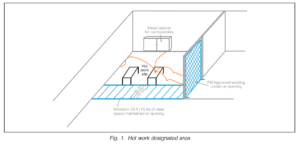
A few weeks back one of my good friends and a hell of a process safety professional contacted me about OSHA’s Hot Work (HW) referenced RAGAGEP, NFPA 51B. He wanted to be sure he was not missing something, as OSHA still references the Year 1962 Edition of NFPA 51B. Just to show how broken OSHA rulemaking is, NFPA 51B has been revised/updated eleven (11) times since!!! And each...
Read More