











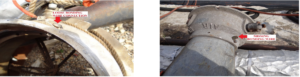
These photos from a recent tank barge explosion serve as a stark reminder of how dangerous cargo tank cleaning and gas freeing operations can be if safety regulations under Title 29 Code of Federal Regulations (CFR) Part 1915 and Title 33 CFR Part 154 are not followed, and equipment is not properly maintained and inspected before each use. Although the investigation into this casualty is not yet complete,...
Read More

The United States Coast Guard issued a Marine Safety Alert after they discovered three (3) separate Liquefied Natural Gas (LNG) carriers with issues with their fixed flammable gas detection systems that resulted in the issuance of deficiencies and delay of cargo operations. While witnessing tests, multiple sensors measured outside the tolerances established by the manufacturer and subsequent calibration...
Read More
Respondent owns and operates an agricultural storage and supply facility where on August 16, 2016, an accidental release of anhydrous ammonia occurred when filling a storage tank. The release resulted in the hospitalization of an employee. On or about March 12, 2019, representatives of the EPA conducted an inspection of Respondent’s Facility to determine compliance with Section 112(r) of the...
Read More
Date of incident: March 2014
Notice of incident number: 2014155400035 Employer: Heavy equipment manufacturer
Incident summary Two workers were bending aluminum tubing as they assembled a decanting post, a metal pipe structure used to decant liquid natural gas from tanks. Another worker was pressure testing a nearby decanting post to identify leaks. An explosion occurred in a hose attached to the decanting...
Read More
These were found as I was doing a design spec for a new NH3 Supply Business. These items are directly from the owner’s manual and were presented to the engineering firm after a “debate” on the reliance on Excess Flow Valve(s). These are about the three best manufacturer’s rules for EFVs I have ever seen! When so many companies are going weaker in their spec’s...
Read More
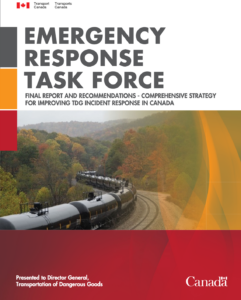
Our friends to the North have once again outdone themselves with an Emergency Response Task Force that developed two (2) new charts to aid in large scale-high hazard responses, such as a High-Hazard Flammable Trains (HHFT) incident. You can read the entire DOCUMENT ( A MUST READ for ALL responders – ESPECIALLY OFFICERS who may fill the IC role during such an incident). This document...
Read More
We have discussed the requirements for welder certification and their documentation, pressure and leak testing and its documentation, but the one area that I have not covered yet is the documentation of the Welding Inspector(s). As we have said, the certified (“coded”) welder makes the weld(s) and then BEFORE any testing, a certified welding inspector will perform an inspection of...
Read More
INCIDENT OVERVIEW
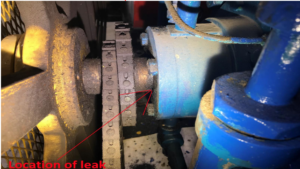
An ammonia release resulted in the temporary shutdown of an ammonia plant in an industrial food processing facility.
Ammonia refrigeration systems are designed to operate at 250 pounds per square inch gauge (Psig). The major components of the system like compressors, evaporators, liquid receivers, piping, and fittings, etc. are installed in a machinery room. The compressor sucks refrigerant...
Read More
DESCRIPTION
Ammonia compressor seal failure
INCIDENT OVERVIEW
An intermittent compressor shaft seal leak resulted in multiple ammonia releases which activated low level (<50 ppm) ammonia detector alarms.
The premises were not evacuated as the release was contained in a well ventilated mechanical room and the detector did not initiate a high-level evacuation alarm.
…
HomeRead More...
Read More
DESCRIPTION
Kraft paper pulping, strong black liquor was sprayed onto buildings and equipment.
INCIDENT OVERVIEW
Erosion of a stainless steel pressure piping elbow located on top of a black liquor storage tank resulted in strong black liquor being sprayed onto buildings, equipment, and the and surrounding area.
INVESTIGATION CONCLUSIONS
Black liquor is the by-product of the Kraft pulping...
Read More
DESCRIPTION
Failure of the main shaft seal ( mechanical seal ) of compressor #2 released ammonia vapor from the refrigeration system into the machinery room.
INCIDENT OVERVIEW
There was an ammonia leak from the main shaft seal, isolated to compressor #2 in the machinery room.
INVESTIGATION CONCLUSIONS
…
HomeRead More »
Read More
Damage description: Compressor valve packing failed to maintain a seal to prevent fluid escape.
INCIDENT OVERVIEW
Ammonia saturated oil leaked from the two-way valve packing of a compressor into the machine room.
The ammonia gases escaped from the leaked oil and triggered the machine room ammonia detector.
…
HomeRead More »
Read More