











When is a pressure vessel not really a pressure vessel? A question that comes up often. And the answer may surprise you. The NBIC and ASME agree on this topic…
…
HomeRead More »
Read More
Several cases of counterfeiting have already been reported. The Center for Disease Control and Prevention (CDC) has listed out some suspect characteristics of counterfeit respirators. Table 1 below summarizes the main suspect characteristics of counterfeit compared to appropriate FFR. Among the suspect features, there are ear loops designs, the absence of markings or references to national regulation...
Read More
In light of the coronavirus disease 2019 (COVID-19) pandemic, OSHA understands that some employers may face difficulties complying with OSHA standards due to the ongoing health emergency. Widespread business closures, restrictions on travel, limitations on group sizes, facility visitor prohibitions, and stay-at-home or shelter-in-place requirements may limit the availability of employees, consultants,...
Read More
Under the Clean Air Act Section 112(r)(1), the General Duty Clause states:
“The owners and operators of stationary sources producing, processing, handling or storing such substances [i.e., a chemical in 40 CFR part 68 or any other extremely hazardous substance] have a general duty [in the same manner and to the same extent as the general duty clause in the Occupational Safety and Health Act (OSHA)]...
Read More
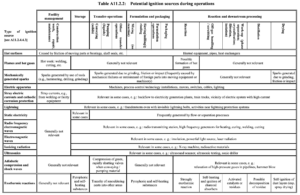
In the most recent revision of the Globally Harmonized System of Classification and Labelling of Chemicals (GHS), they list some very interesting potential ignition sources for dust explosions; several I have never ever even considered being an ignition source. Check these out…
…
HomeRead More »
Read More
As we have discussed, the latest revisions of the Globally Harmonized System of Classification and Labelling of Chemicals (GHS) has a new criterion for categorization of flammable gases. The GHS now has sub-categories of CAT 1 Flammable Gases: 1A and 1B. CAT 1B flammable gases have a fundamental burning velocity of less than 10 cm/s. Never have I dealt with burning velocities...
Read More
Your inquiry relates to the enforcement of OSHA’s Process Safety Management (PSM) standard, 29 CFR 1910.119, to two hypothetical scenarios you provided that are related to upstream oil and gas production facilities.
Background/Scenarios: In your letter, you describe the following scenarios involving natural gas processes that are in the production phase of upstream oil and gas operations. Both...
Read More
One of the topics we have debated about 1910.146 is whether (c)(5) and (c)(7) entry methods could be used simultaneously on the same space. I was a resounding “No” but since we could never get an official answer from OSHA, there were many in our profession who felt it was acceptable to use (c)(5) and (c)(7) entry methods simultaneously on the same space. Then in 2015, OSHA published...
Read More
This is not meant to be controversial, but my experiences over the past 20 years tell me many will disagree. I stand by this article as the SAFE and COMPLIANT way to achieve a NON-Permit Required Confined Space. This article should have been written 20 years ago, as this topic has been misunderstood since OSHA published 1910.146 way back in the early 1990’s. We still see many facilities misunderstanding...
Read More
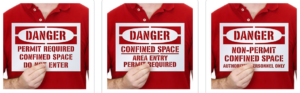
Have you ever seen a Permit-Required Confined Space (PRCS) labeled using the term “Confined Space” instead of “Permit-Required Confined Space”? Does it matter what we call them?
…
HomeRead More »
Read More
A gas distributor and its parent company have agreed to pay $257,000 to settle RMP violations discovered during inspections following a fatal 2013 explosion at a Texas facility. On the morning of February 9, 2013, at the La Porte #1 facility, there were explosions and a fire. The Incident occurred in the Gravimetric Unit (“Unit”) at the facility, where the blending or filling of cylinders with...
Read More
Sitting here relaxing this Sunday afternoon, I am comforted in now knowing 100% why engineering controls rule over Admin Controls and PPE. As soon as President Trump and his team mentioned some alternative treatments this week for ridding the body of the virus, a lot of folks latched onto the ideas. Our society, which is indicative of our workplaces, wants some easy way of achieving their desired goals....
Read More