









Here is a look at OSHA’s Employee Emergency Alarm (1910.165) compliance activity in 2018 (October 2017 – September 2018). As you can see, OSHA found issues with complying with this standard on 10 inspections and issued 10 citations for a total of $17,147 in fines. Here is a quick breakdown of activity:
49111 / Postal Service with 2 citations totaling $10,878
31141...
Read More
On May 31, 2012, Employees #1 through #6 were working when an evaporator that had been deactivated was mistakenly activated by a worker. Approximately 68.5 pounds (31 kilograms) of ammonia were released on an overhead catwalk. Employees #1 through #6 inhaled the fumes, and they were transported to a hospital. Employee #1 was not hospitalized, but Employees #2 through #6 were. The narrative did...
Read More
In our daily work as safety professionals, we are guided by a lot of codes, standards, regulations, and rules that are intended to establish a baseline, albeit a minimum level of risk control. These codes, standards, regulations, and rules can be confusing to many who tried to read or interpret what the agency/group intends with their requirements. In fact, there are two (2) itty...
Read More
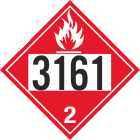
An MC331 tanker truck arrives at your facility and is placard with the following placard:
And you have three (3) storage tanks that are labeled with NFPA 704 Diamonds, which tank do you think is the best fit for this material if you had to make the decision:
In order to decide, you look up what a “Class 2” Flammable Gas assigned the UN # of 3161 is and you...
Read More
With all the chatter these past few weeks about flammable gases and their NFPA 704 Diamond “Degree of Hazard”, it was suggested by several SAFTENG members that I write an article explaining what a “flammable gas” actually is, as some of our group text indicate some may not fully understand the true hazard of working with/around a liquified pressurized gas. So here we go…
First...
Read More
This has been a fun week with all the dialogue I have had with so many SAFTENG members; I only wish more were comfortable having these discussions online, but the fear of being traced back to an employer or being trolled by a lawyer I guess is a legitimate fear in our technical/risk profession. One of the most popular responses I have received is “why does it matter if the chemical...
Read More
At 11:30 a.m. on January 23, 2018, an employee was moving product in a freezer with a forklift. The forklift struck UNPROTECTED refrigeration piping, breaking a valve and releasing anhydrous ammonia. The employee’s face, eyes, and chest were exposed to the anhydrous ammonia and the employee was hospitalized.
…
HomeRead More »
Read More

The NFPA 704 Diamond still reigns supreme as the labeling system for bulk tanks in the chemical industry and recently I posted an article about a Category 1 Flammable Gas and it’s “Degree of Hazard”. It is my professional opinion that a CAT 1 Flammable Gas is a “4” in the NFPA Flammability Hazard; however, based on texts/e-mails/phone calls I can say we are...
Read More
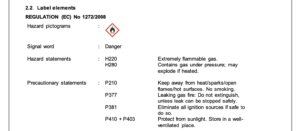
Over the past four (4) years, I have been involved in an industry that I would have never thought would be some of my Process Safety clients and over these same four years, I have come to feel sorry for an entire industry. This industry was forced to change to an alternative chemical in order to “protect the environment”; albeit their new chemical is NOT a less “hazardous”...
Read More
Most emergency responders know that NH3 loves water and well-placed fog pattern will go a long way to “scrubbing” a large NH3 cloud. But after what we witnessed on Thursday morning, I do wonder if we all know the do’s and don’ts of using water around NH3. Yes, the incident Thursday was catastrophic and impacted hundreds of citizens and responders, but does this permit...
Read More
At 4:00 p.m. on January 5, 2018, Employee #1, employed by an industrial cleaning company, was working at a multiemployer project. He was working from an 8-foot stepladder. He was 2 feet above the ground and monitoring and adding water as necessary to evaporator pans to prevent freezing. The float system on the evaporator failed, a pipe connector broke, and 89 gallons (450 pounds) of anhydrous (liquid)...
Read More
OSHA defines entry as:
“Entry” means the action by which a person passes through an opening into a permit-required confined space. Entry includes ensuing work activities in that space and is considered to have occurred as soon as any part of the entrant’s body breaks the plane of an opening into the space.
Here is a tragic reminder as to why they consider the space as being enter...
Read More