









THIS CASE IS NOT A FINAL ORDER OF THE REVIEW COMMISSION AS IT IS PENDING COMMISSION REVIEW
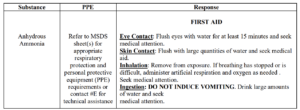
This case arose from an anhydrous ammonia (NH3) release that occurred on May 23, 2017, at a Power Plant. OSHA conducted an investigation and subsequently issued a two-item citation for alleged violations with proposed penalties of $18,108. In this case, the OSHRC discussed when a response to a release is...
Read More
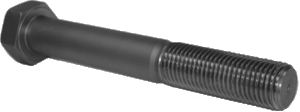
As I have said many times before, the world of process safety can be a very confusing and strange sandbox to play in. There are so many rumors and innuendoes stemming from the fact that our PSM/RMP world is made up of a weave of RAGAGEPs, many of which practicing process safety professional can’t fully understand and apply. Just recently I was told by a piping contractor that “hex...
Read More

9/2020 UPDATE: I have contacted the Minnesota Department of Agriculture, Pesticide & Fertilizer Management Division regarding a statement on this 2-page “Cheat Sheet” regarding their apparent requirement that Hydrosrtatic RVs be put on NH3 vapor piping and vapor hoses. This is how it is presented:
Hydrostats must be installed in each section of liquid and vapor system piping...
Read More
Background: Your company has an internal communication method to communicate the identity of hazardous chemicals transported on company vehicles from one location to another location within the same building (intra-plant). This method uses words, pictures, and/or product identification number, NFPA, HMIS, or DOT identifiers. The company also uses this communication method when transporting hazardous...
Read More
With OSHA’s Process Safety Management standard coming up on its 27th birthday, we are seeing companies still grappling with managing their Hazardous Locations (HAZLOC). When the process involves a flammable liquid or gas, it is still fairly common to find a HAZLOC containing permanently installed equipment that is not rated for the HAZLOC. And by equipment, I am not talking about mobile equipment...
Read More

February 6, 2019
MEMORANDUM FOR: REGIONAL ADMINISTRATORS STATE PLAN DESIGNEESTHROUGH: KURT A. PETERMEYER ...
Read More
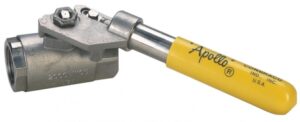
The act of draining/venting a highly hazardous chemical (HHC)/extremely hazardous substance (EHS) from a process can be one of the most hazardous tasks a worker can undertake, but there are some easy and cheap actions/designs we can consider to reduce these hazards. Some of the best guidance I have come across is the IIAR’s “Oil Draining” set up and the requirement for the use...
Read More
Recently I had the pleasure of working with a client on a PHA project during which we came across another excellent example of how “start-up’s” can be very different from the “normal start-up” procedure. I like to bring these examples to our attention as we still hear this all the time… “our initial start-up/normal start-up/start-up after ESD, etc. are all...
Read More
The decision by the OSHRC settles several KEY PSM application debates. The accident involved a boiler that provided steam to a covered process and the boiler also used fuel from the refinery process(s) so OSHA took the position the boiler was part of the “covered process” because it was both interconnected and co-located such that the boiler could impact the covered process. ...
Read More
This incident is one I call attention to as it involved a lack of LOTO during removal of a valve on a hot water system. OSHA issued a Willful citation because the work was done without having an energy isolation control panel/task specific LOTO procedures. The work was done from an aerial lift without LOTO in place – once the valve was removed a computer program called for hot...
Read More
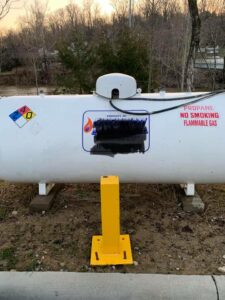
Many of you have heard me joke about bollards being “lazy bollards” when they’re just bolted down to the concrete or worse into asphalt. We call them “lazy bollards” because they don’t work. Get it?
Well, I have discovered a new low for bollard design!!! I call this the “unemployable bollard”!!! I kid you not, this is real, not a setup…
Rebar into...
Read More
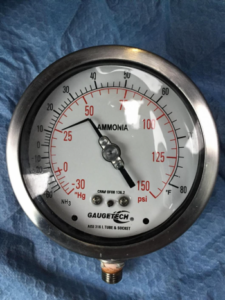
After unscheduled maintenance to drain oil from the pumps, the refrigeration system was noted to be slow to return to performance and oil contamination of some system evaporators was suspected. The responding refrigeration mechanic stated he attempted to improve system performance by closing valves to generate pressure within an evaporator to move or dislodge potentially trapped oil. The pressure rose...
Read More