













Hearing protector fit testing (HPFT) is a critical advancement in workplace hearing conservation and is recognized as a best practice (OSHA et al., 2008; OSHA, 2017). HPFT is not required under OSHA’s Occupational Noise Exposure standards (29 CFR 1910.95; 29 CFR 1926.52), but can be a valuable training tool for workers. HPFT measures the amount of noise reduction (attenuation) a hearing protection...
Read More
I have written about this incident a couple of times, as it is full of learning opportunities. The biggest of which is the practice of REDUCING PPE after the initial opening was uneventful, and we have “verified” our positive means of isolation is holding. This is a common practice for long-duration jobs and plays a role in heat stress management. Basically, we are leveraging the positive...
Read More
Episode 295 with Bryan Haywood focuses on how to manage complex lockout/tagout (LOTO)—the kind of hazardous‑energy control work that goes far beyond a simple disconnect. The episode highlights why complex LOTO requires deeper planning, stronger coordination, and more rigorous verification than standard procedures.
https://www.podbean.com/pw/pbblog-tnwgq-bbdaf4
Read More
NOTE: Please read my posts on Car Seal Programs, as this incident could have been prevented with a properly implemented program.
A production worker and USW member was found unresponsive by a co-worker shortly after beginning work in a powder coating spray booth. The co-worker called for first responders, who immediately removed the worker’s supplied-air respirator hood and began CPR, with assistance...
Read More

Many have seen a gauge such as the one below. It will be on an Acetylene Cylinder. But how many know why the gauge scale is RED in color from 15 psig and higher?
…
HomeRead More »
Read More

What PPE do you wear for a leak behind this door? What is the primary hazard that causes you the most concern?
We see so many failures with the NFPA 704 Diamond. From them being applied as a square, rather than a diamond. We see them applied upside down. We see numbers larger than 4.
…
HomeRead More »
Read More
The prevention program requirements under 40 CFR Part 68, Subparts C and D, include hazard reviews and process hazard analyses. Is a hazard review synonymous with a process hazard analysis (PHA)?
No. A hazard review is different from a PHA. A hazard review is part of the Program 2 prevention program (40 CFR §68.50).
…
HomeRead More »
Read More
OSHA cites 3 companies after H2S gas exposure fatally injures six (6) workers at Colorado dairy farm
Prayers and RIP
After all the media reporting, it seems this was NOT a PRCS incident. OSHA mentions a “pump room” and they failed to issue any PRCS citations so my best guess is this was NOT a PRCS incident. But this was another H2S exposure incident which claimed six (6) lives.
OSHA has cited three (3) companies after its investigation determined workers died after exposure to hazardous...
Read More
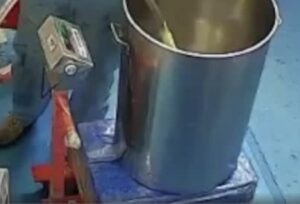
Another video has surfaced, showing what static electricity can do in the presence of flammable vapor. The video below actually catches the static discharging as the vessel does not appear to be grounded. This is another transfer gone bad. Open top container. It does appear the operator has the hose down inside the tank, but as he pulls it out, it does not appear he had the hose at the bottom of...
Read More
Chemical Process Safety (PSM/RMP)
Flammable Liquids
Flammable Liquids Videos
Free
Hazardous Materials
OSHA Compliance
So what are we seeing in this video, other than the tragic loss of life?
I can say without knowing the specifics that he was transferring a FLAMMABLE liquid. That flammable liquid was most likely a NON-CONDUCTIVE flammable liquid. Several serious failures in what we are seeing:1) SPLASH FILLING is a NO-NO in any flammable liquid process, but a serious risk when dealing with NON-CONDUCTIVE flammable...
Read More
Overfilled propane tank causes evacuations, road closures in Littleton
Fire crews in Littleton responded to a propane leak on Pike Avenue on Friday. The Fire Department said a resident called after hearing a “pop” and a loud roaring sound from a propane tank. Officials confirmed the tank was venting and that gas could be smelled throughout the neighborhood, prompting evacuations from...
Read More
An OSHA investigation found numerous safety hazards at a worksite where workers were exposed to sewage gases, resulting in two (2) fatalities. Investigators found that on Aug. 11, 2025, three workers were installing and repairing sewer lines inside a manhole when they were overcome by sewer gas and became unresponsive. One (1) worker regained consciousness and managed to self-rescue, and the two (2)...
Read More