











A chicken processor petitioned for review of a determination by the Occupational Safety and Health Review Commission (the “Commission”) that it violated various regulations of the Department of Labor’s Occupational Safety and Health Administration (“OSHA”). We find no error, so we deny the business’s petition. The Secretary of Labor (“Secretary”) is charged by statute “with responsibility for...
Read More
Today, the Indian government released its investigation findings regarding the fatal Styrene release on May 7, 2020, which killed 12 citizens and hospitalized 585 others. This incident, like the many before it, came about by a number of failures the facility/company made in the management of their Styrene inventory. In the light of the root causes discussed, the Committee is of the view...
Read More
PLEASE NOTE this entire inspection citation is based on the facility not having their piping labeled per ASME A13.1 – A13.1-2015, Scheme for the Identification of Piping Systems
Respondent is the owner of a polymer manufacturing plant and based on the observations of EPA inspectors during the Inspection, EPA has determined that Respondent has handled and handles a maximum of approximately 70,000...
Read More
In 2014, Part XI – Confined Spaces was identified as a priority for review by the Labour Program’s Occupational Health and Safety Advisory Committee (OHSAC). The OHSAC made up of representatives from the Labour Program and employee and employer groups, conducted an in-depth review of Part XI between 2014 and 2017.
The proposed changes are actually more in-line with OSHA’s 1910.146 and 1926.1201-.1213...
Read More
It’s been 8 years since we have been using the Globally Harmonized System for our Hazardous Communications. This much-needed update to OSHA’s HAZCOM standard was intended to correct many bad practices and to “harmonize” the USA with the rest of the world. One of the big drivers for this change was the need to formalize the MSDS/SDS into the 16-section format and...
Read More
On January 27, 2019, 12 employees needed transport to nearby hospitals after a a release of 2,100 pounds of anhydrous ammonia. OSHA cited the facility for failing to:
Equip an ammonia refrigeration system with a pressure relief device as referenced by the manufacturer’s operating manual;
Train technicians to use an alternative over-pressure safety procedure to prevent pipes from rupturing and...
Read More
OSHA has cited a container cleaning business for exposing employees to confined space hazards after two employees were fatally overcome by fumes while cleaning a tank trailer. The company faces $497,920 in penalties. OSHA investigators determined that one employee became unresponsive after entering the trailer’s confined space. After a non-entry retrieval system used to rescue the worker failed, several...
Read More
Nitrogen… an often misunderstood SAFETY gas that many fear and for good reason! Imagine you have a flammable liquid that has a Flash-PointP<100°F and you worry about static or other ignition sources causing an event inside your storage container… what can I do to lessen the risk of a fire/explosion in the headspace of my container? Lower the Oxygen concentration to a level...
Read More
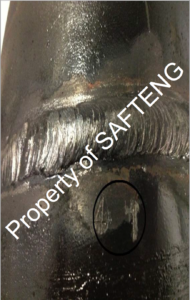
One of the most requested slide deck over the years has been from my 5-Day RAGAGEP course, specific to ASME B31.5, Refrigeration Piping and Heat Transfer Components. The PowerPoint file below is only 12 slides from a 300 slide presentation, but the requirements noted in these 12 slides are often not understood at the plant level and thus are often issues during PSM/RMP audits and/or compliance...
Read More
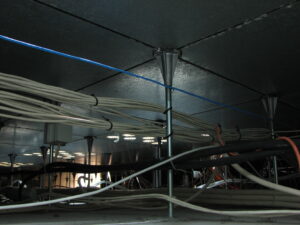
I spent several years working at semi-conductor facilities (the Cincinnati SUMCO plant was one of the finest!) and it was world’s apart from a chemical facility. When I worked in chemical plants we always used to say… “this ain’t no chocolate factory”. But when I arrived at SUMCO I swear it was cleaner than any food plant I had ever been in; yet this facility...
Read More
Does your business allow workers to carry their personal lighters in their pockets? In my word of Flammable Liquids and Gases (FLAGs) and HAZ MATs we never allowed people to have lighters on them while on our property – some companies do not even allow them in parking lots. In most of my plants, our smoking areas had electrical lighters (like the push-in/pop-out style in cars); pipe smokers...
Read More
7/8/20 UPDATE: this LOI was NOT removed from the OSHA website; it was merely MOVED to the Year 2017 LOI Page (Linked Below). The letter was MOVED without any changes to its content – it was just moved to its proper year. This was merely a recordkeeping move by OSHA to reflect the year the letter was sent, but due to the passing of a great OSHA team member, the letter got lost in the...
Read More