












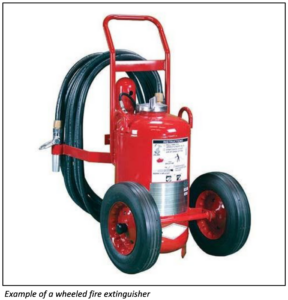
In January 2020, a wheeled fire extinguisher failed to operate because of a blockage in the siphon tubing line. This failure resulted in two personnel requiring medical evaluation and led to a delay in extinguishing a fire. An investigation of the fire extinguisher failure found that the device pressured up as intended, but the moisture disc did not rupture. The siphon tube had become packed...
Read More

A hydrogen leak originating from a tank within a high-pressure storage unit serving a hydrogen vehicle fueling station resulted in fire and explosion. Emergency responders were on scene within 7 minutes and contained the fire within 3hours. No damage was reported to the separate forecourt H2 dispenser or to other major station components within the station backcourt compound. No personnel injuries...
Read More
An ideal culture of safety is the engine that continues to propel the safety management system towards the goal of maximum safety and health, regardless of the leadership’s personality or current commercial concerns. Such an ideal is hard to achieve in the real world, but it is nonetheless a goal worth striving for. The power of this engine relies heavily upon CONTINUING RESPECT for the...
Read More
Many people talk as if a safety culture can only be achieved through some awesome transformation akin to a religious experience. We take the opposite view, arguing that a safety culture can be socially engineered by identifying and fabricating its essential components and then assembling them into a working whole. It is undoubtedly true that a bad organizational accident can achieve some dramatic conversions...
Read More
We all have one (1) common bias, psychologists call it the “fundamental attribution error.” The fundamental attribution error is the tendency for people to over-emphasize dispositional or personality-based explanations for behaviors observed in others while under-emphasizing situational explanations.
And we have ALL DONE IT at some point in time after an accident. In...
Read More
Keep in mind the following was published in 1997 in Managing the risks of organizational accidents by James Reason. And he was not the first to say it, but he may have been the best at explaining it! Many organizations could make substantial improvements in their safety performance if they would just start measuring the “safety process” that is intended to reduce the injury...
Read More
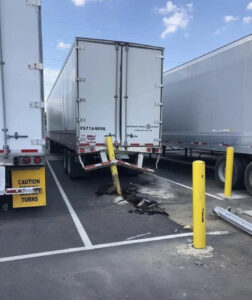
All bollards have limitations. Most are designed to stop a 12,000-pound vehicle traveling at 10-mph. Most non-commercial vehicles will weigh far less than 12,000 pounds; however, 18-wheelers will weigh far more than 12,000-pounds. These are the bollards that are the ones that are 4″ steel pipes filled with concrete and buried at least 3′ into the ground. But this...
Read More
On or about September 18, 2018, EPA conducted an inspection of Respondent’s Facility to determine compliance with Section 112(r) of the CAA and 40 C.F.R. Part 68. Information gathered during the EPA inspection revealed that Respondent had greater than 10,000 pounds of anhydrous ammonia in a process at its facility.
From the time Respondent first had onsite greater than 10,000 pounds of anhydrous ammonia...
Read More
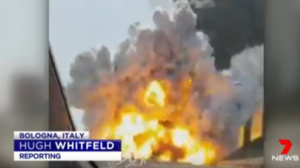
Recently a fire district posted a video of a HIT occurring on a gasoline storage tank at a residence in Alaska. In their posting, they called the event a BLEVE and technically speaking we can see (as I show below) that this event was NOT a BLEVE.
A Boiling Liquid Expanding Vapor Explosion (BLEVE) is best described by Canada’s Transportation of Dangerous Goods…
…
HomeRead...
Read More
One of the questions that we all seem to get about Confined Spaces is the “service bays” at vehicle repair shops like your quick oil change shops where you position your vehicle over an open pit. Under the floor, there is a room where the technician enters via a set of stairs in order to gain access to the undercarriage of your vehicle. This is easier and safe than lifting the...
Read More
We finally have some “sort of” official definitions from OSHA of what a cloth face covering, surgical mask, and respirator are and how they differ. The new guidance outlines the differences between cloth face coverings, surgical masks, and respirators. It further reminds employers NOT TO USE SURGICAL MASKS OR CLOTH FACE COVERINGS WHEN RESPIRATORS ARE NEEDED. These frequently...
Read More
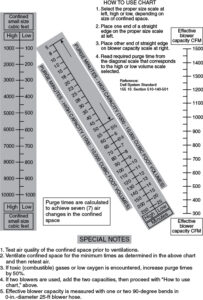
As promised, this is my follow-up to my previous posts regarding Ammonia Refrigeration Evaporative Condensers and the fact that they are Permit-Required Confined Spaces (PRCS). In this article, I will explain the options we have to enter these spaces and what all goes into each entry option.
Before we get into each entry option, it would be helpful to explain that two (2) of the options, .1910.146...
Read More