











One (1) bolt on a five(5) bolt flange was left loose by just one full turn and we have a small release of a flammable gas… EXCELLENT video by Baker Risk.
Read More
From 2011 to 2018, 1,030 workers died from occupational injuries involving a confined space. The annual figures range from a low of 88 in 2012 to a high of 166 in 2017.
Fatal occupational injuries involving confined spaces, 2011-2018
Year
2011
2012
2013
2014
2015
2016
2017
2018
Fatal work injuries
120
88
112
116
136
144
166
148
As documents in a fatal injury work injury case may vary, cases...
Read More
The company is a fuel filtration and tank cleaning company. In December 2014, an employee was found unresponsive and later died from gasoline inhalation while cleaning tanks at a construction site in Daytona Beach, Florida. Following the incident, OSHA conducted an inspection and issued an 11- item serious citation for violations of 29 C.F.R. § 1910.23(a)(6) for failure to guard an open manhole; various...
Read More
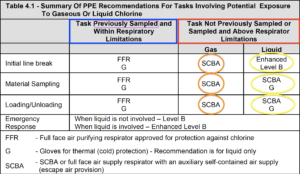
I do a lot of work in Ammonia and Chlorine, from process safety to emergency response, and the one thing I commonly get asked is why do I write so much about ammonia accidents and not so much about chlorine accidents. Well, to be honest, the vast majority of my chlorine clients are much better at containment than are my ammonia clients and this can be seen on a grander scale by looking at OSHA...
Read More
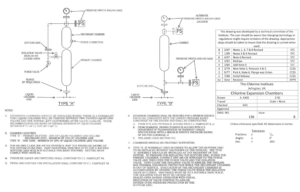
For nearly 25 years I have seen CLOSED relief systems used successfully on a multitude of processes involving Extremely Hazardous Substances (EHS) and for many years I have been proposing they be used in the Ammonia Refrigeration industry. The leading trade group for ammonia refrigeration has had a long-standing position against the need for hydrostatic relief protection on liquid piping runs....
Read More
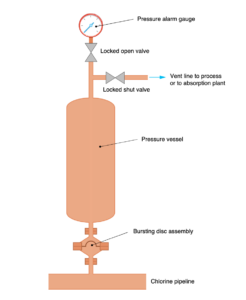
We visit this topic once again as I have already spent time with a “former client” who is now in a serious bind with both OSHA and EPA after a significant Chlorine (Cl2) release. They are a former client as they fired me after a 5-year PHA and 3-year audit a number of years ago. They hired me because of their frustrations regarding the handling of their Cl2 and their inability...
Read More
This week I received a call from a client who had yet another visit from OSHA regarding COVID-19 complaints, but this time the CSHO was an experienced safety professional who peeled that onion back a few more layers and thus she was recommending a serious violation of HAZCOM related to the COVID-19 safety program. What she found and how she found it is something all facilities should be aware...
Read More
Back in my HAZMAT days, we did a lot of transfers from damaged containers to proper containers to mitigate the release of hazardous materials. When the HAZMAT was a flammable liquid, we oftentimes had to construct our own grounding grid. This was more than not a massive challenge for us as we did this all over North America and the soils differ immensely depending on where we were operating...
Read More
The United States Coast Guard (USCG) has issued a Safety Alert to emphasize the importance of properly installed and maintained listed or certified safe electrical equipment in hazardous areas in order to reduce the risk of fire or explosion on board vessels. The publication follows an increasing number of instances by the Coast Guard where there was a lack of knowledge regarding the installation,...
Read More
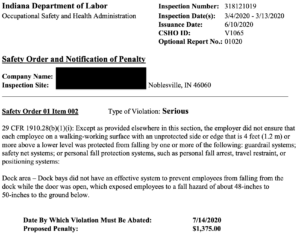
This citation is what we call a “gimme” as this can be found at just about every workplace that has loading docks. We have written this up many times during our S&H audits, only to get some lovely looks and compliments from the facility personnel. Many seem to think that if the dock is only 1-2″ over the 48″ height that this is not a violation of 29 CFR 1910.28(b)(1)(i). ...
Read More
First, let me state that this construction standard has never been cited. This is based on my personal knowledge and the OSHA database; however, it is still in effect and could be cited. Last year, OSHA revised their standards and they simply did away with the duplicate language in 1926.64 and said to follow the requirements in 29 CFR 1910.119. But the bigger question to ask is when...
Read More
Many large scale processes that use Cat 1, 2, and 3 flammable liquids may also rely on a Nitrogen purge system to ensure the space within the process vessel is BELOW the Limiting Oxidizer Concentration (LOC) – sometimes called the Minimum Oxygen Concentration (MOC). This safety system is based on the simple fact that if we maintain the level of oxidizer, usually the oxygen in the air but...
Read More