









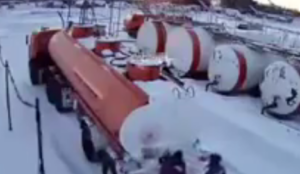
A December 2015 video at Russian oil and gas field in Siberia recently came to light and although it is tough to watch two workers perish, it is a video that needs to be shared to show the hazards of Hot Work on flammable liquid containers. The video shows two workers using a torch to thaw a valve at the back of the tanker truck. I have broken down the video into three frames showing...
Read More
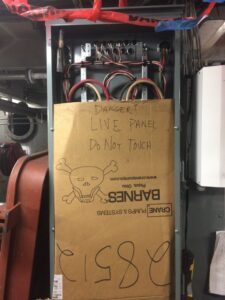

VIEWER DISCRETION ADVISED!
Read More
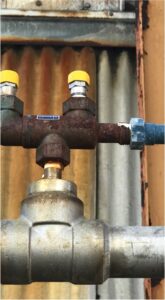
Recently I had the pleasure of working with a team of engineers and EHS professionals on a PHA project for an Anhydrous Ammonia process. For those who may not know, hydrostatic relief valves are required on Anhydrous Ammonia processes, that are NOT associated with mechanical refrigeration, and unfortunately, there is little guidance on their design basis. For example, does a hydrostatic relief valve...
Read More
NOTE: a reduction in penalty can come about many different ways, so a reduction in penalty does not imply that the hazardous condition did not exist at the time of the inspection. Many reductions in penalties occur due to negotiations requiring abatement of the hazard and extra’s like training supervisors in OSHA 10-hr course.
Since the winds have shifted in D.C. with the new...
Read More
There has been some mild interest in this course, with some inquiries about doing “special session” at a facility. Typically these courses are taught for a facility/business and the topics can be revised based on the facility’s need(s). This is NOT an OSHA 10-hour or 30-hour course and I do NOT issue certificates for these courses, but I will put this week of training...
Read More
Information collected during the September 14, 2016 inspection of Respondent’s Facility revealed that Respondent failed to develop and implement a risk management program that complied with the requirements of 40 C.F.R. Part 68.
EPA alleges that Respondent has violated the CAA and federal regulations promulgated pursuant to the CAA as follows:
Count 1
Respondent failed to update and revalidate...
Read More
Respondent is the owner and operator or a commercial refrigeration facility that utilizes compressed anhydrous ammonia as the refrigerant. On or about January 28-29, 2015, EPA conducted an inspection at, and obtained information regarding the facility’s compliance with Sections 112(r)(1) and (7) of the CAA and the implementing regulations at 40 C.F.R. Part 68. Preliminary violations were set...
Read More

A lot of vital information is packed into a 10-minute presentation!
Dr. Pupulidy is a professor at the University of Alabama’s (UAB) Master of Engineering with a concentration in Advanced Safety and Engineering Management program. Which by the way I am proud to say is a “Partner in Safety” with SAFTENG; in fact, they use some SAFTENG HF pictures in their teachings. ...
Read More
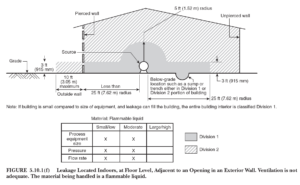
In the world of Process Safety Management and processes containing flammable liquids and gases, the management of hazardous locations (HAZLOC) can be very difficult to manage; especially when a facility decides that some of their “Nonincendive” devices are acceptable. The use of “Nonincendive Equipment” is one (1) of the twelve (12) acceptable “protection...
Read More