













Chemical Process Safety (PSM/RMP)
Hazardous Materials
Lockout Tagout
Lockout/Tagout Accidents (includes Machine Guarding)
OSHA Compliance
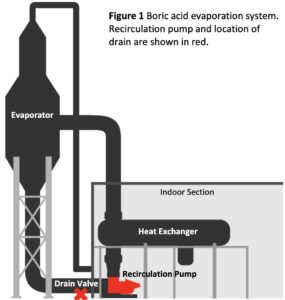
In July 2012, a 64-year-old maintenance mechanic at an aluminum foil processing facility died after being exposed to an approximately 180-degree Fahrenheit solution of boric acid and water while trying to remove a recirculation pump from its housing. The pump was part of a boric acid evaporation system. The system took several days to completely cool through draining and flushing before it was safe...
Read More
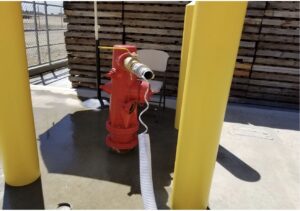
On August 19, 2019, at approximately 3:00 p.m., a 67-year-old male water truck operator, working as a seasonal employee, sustained severe head injuries when a pressurized water hose burst and he was knocked to the ground. He died two days later from his injury.
The victim’s employer was a cooperative of almond growers that provided hulling and shelling services to grower members. The cooperative...
Read More
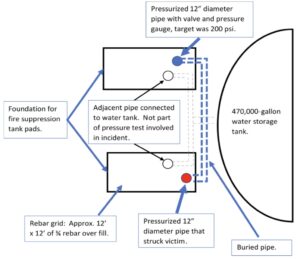
I have written a lot about the hazards of “pressure testing” piping, and in all of those posts I have stated how much “safer” Hydrostatic Testing is, compared to pneumatic testing. But this fatal accident shows us that even hydrostatic testing comes with fatal risks.
During a hydrostatic pressure test of a fire suppression system, a subcontracting pipefitter, 49, was struck...
Read More
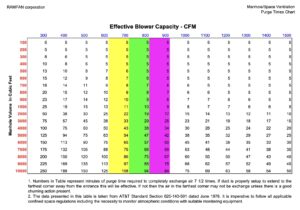
The AT&T Standard Section 620-140-501 (often referred to as Bell System Practice, or BSP, 620-140-501), published in June 1976, is a foundational safety document for the telecommunications industry. It outlines the strict procedures for testing, purging, and ventilating manholes and other confined spaces before and during employee entry. Because telecommunications workers frequently operate in...
Read More

I have a 10,000-gallon storage tank that I need to ventilate with forced-air ventilation. My program states I need to achieve at least 7 air changes per hour. What CFM blower do I need to achieve this?
This is the question I asked Google Gemini 3.1 Pro, and I’ll be damned, it was SPOT ON!
…
HomeRead More »
Read More
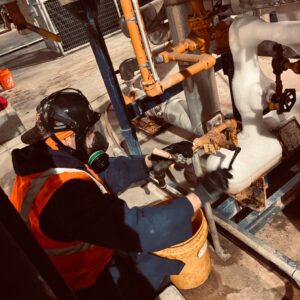
Bear with me on this, as I know this is getting deeper than most think about Respiratory Protection. But the vast majority of the people I train and fit test are personnel who enter/work in IDLH environments, so I get very picky about my RP practices.
OSHA’s long-standing Fit Test Procedures in Mandatory Appendix A state:
13. The fit test shall be performed while the test subject is wearing...
Read More
On February 4, 2004, a 23-year-old tank mechanic died from lack of oxygen after entering a chemical transport tank prior to a scheduled inspection.
The employer was a longtime Oregon company, based in Portland, specializing in the manufacture and maintenance of transportation tanks. At the time, the firm had 5 factories and 11 sales branches in several western states, employing over 550 workers,...
Read More
On August 11, 2003, a 50-year-old production worker was seriously burned and died 5 days later from a fire that resulted when stored wood flour exploded at a wood-flour mill. The employer is a wood-flour mill that grinds paper-mill waste into a fine powder, and bags and stores it as a marketable product for a variety of industrial applications. The building where the incident occurred was built to...
Read More
In September 2010, a 48-year-old male worker (Victim I) employed by a village Department of Public Works (DPW) and a 51-year-old male volunteer firefighter (Victim II) of the village Fire Department (FD) died after entering a sewer manhole. The manhole was located behind the firehouse. The Fire Chief and a firefighter were called in by the DPW general foreman (GF) to unlock the firehouse and move the...
Read More
On September 16, 2024, a 20-year-old male wash bay attendant (victim) attempted to utilize an electric grease gun to apply grease to the rear axle of a liquid petroleum gas (LPG) tank trailer. As the victim activated the grease gun, a spark ignited the butane gas that was actively escaping the cargo tank, instantly engulfing the victim in fire. The victim succumbed to the injuries sustained in the...
Read More
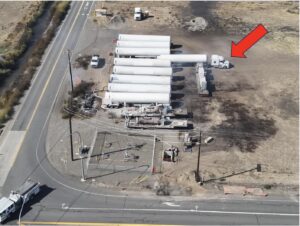
A 62-year-old technician was killed when an LNG vapor cloud exploded while he offloaded liquefied natural gas (LNG) from a tanker semi-trailer. Heworked for his employer, a natural gas supplier, for about five (5) years. The technician was offloading the trailer at a temporary and mobile LNG transfer station. The trailer belonged to the technician’s employer but was being hauled by a driver from a...
Read More
DISCLAIMER: I am NOT an Industrial Hygienist, so seek help elsewhere if you find this post intriguing.
How many of you use the 95th Confidence Interval in your “Data Sampling”?
Whether it’s personal sampling, area sampling, or any sampling looking for safety data, do you attempt to achieve the 95th confidence interval?
A 95% confidence interval is a range of values, calculated...
Read More