








For the 2021 edition of NFPA 30, the committee introduced a sweeping change in the classification scheme for liquids. The term ignitible liquid has been introduced to initiate a process whereby the terms flammable liquid and combustible liquid are no longer used. This causes the requirements in NFPA 30 and other codes and standards to adopt a scheme based exclusively on the liquid physical state and...
Read More
The 2021 International Fire Code (IFC) contains regulations to safeguard life and property from fires and explosion hazards. Topics include general precautions, emergency planning, and preparedness, fire department access and water supplies, automatic sprinkler systems, fire alarm systems, special hazards, and the storage and use of hazardous materials. Key changes to the 2021 IFC include:
…...
Read More
All new or modified chlorine piping systems must undergo pressure testing to verify the integrity of the piping (see section 11.4 for leak testing). ASME B31.3 (13.2.8 ), Process Piping testing requirements, should be applied as a minimum standard. There are three (3) types of acceptable testing methods:
hydrostatic testing,
pneumatic testing, and
the alternate test method.
ASME Code or your...
Read More
Liquid chlorine has a very high coefficient of thermal expansion. Relatively small increases in liquid chlorine temperature can create enough pressure to cause a blocked-in section of piping to rupture or leak at the connections. A temperature rise from 14°F (-10°C) to 32°F (0°C), will expand liquid chlorine by 2%. However, in a contained volume, the same temperature rise will increase the hydraulic...
Read More
Leak testing should be done once the piping system is completely assembled. The purpose of a leak test is to ensure all connections and components will not leak chlorine when pressurized. Leak testing is not a substitute for pressure testing. If the system was not disassembled and reassembled as part of the pressure testing and drying process, the nitrogen/dry air test (i.e. Step 1) may be omitted.
Step...
Read More
The Chlorine Institute has revised its piping RAGAGEP and it is FREE for anyone who wants it. Pamphlet 6 – Piping Systems for Dry Chlorine, Edition 17 contains major revisions to the following sections, in addition to minor clarifying changes throughout the pamphlet:
…
HomeRead More »
Read More
PHMSA provides written clarification regarding the pipeline safety regulations found at 49 CFR parts 190–199 in the form of FAQs and other guidance materials. PHMSA is requesting public comment on a set of DRAFT FAQs that were developed by the Working Group that was established by the Gas Pipeline Advisory Committee (GPAC) and the Technical Hazardous Liquid Pipeline Safety Standards Committee, also...
Read More
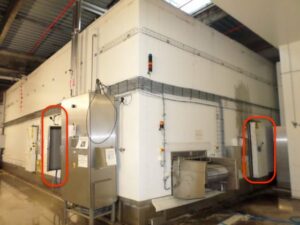
The short and simple answer is YES. It is, without a doubt, a PRCS. This debate is much like the “Is an Evaporative Condenser a PRCS” discussion. This week, I was presenting at the 2020 Refrigerating Engineers & Technicians Association (RETA) virtual conference, and my presentation was “Evaluating Your Ammonia Refrigeration System to determine if certain equipment...
Read More
EPA has reached an agreement with a Nitrogen manufacturer to resolve federal civil environmental violations of the Clean Air Act’s chemical accident prevention measures and of federal laws requiring timely notification of chemical accidents. EPA identified these violations following an anhydrous ammonia release that led to thirteen workers being injured at the facility in Arizona. The facility, which...
Read More
This is SIGNIFICANT for those who truly believe in the purpose and function of OSHA’s LOTO standard. I was never more disappointed in an ALJ than after they decided to vacate such a clear violation of LOTO. I may have even said, “Why do lawyers/judges make for bad safety professionals.” This fatality involved an apprentice for an electrical contractor working at...
Read More
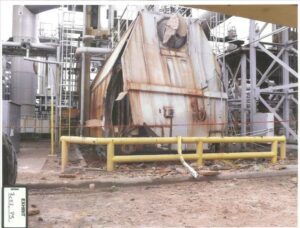
After a boiler exploded at a refinery, OSHA cited the refinery’s owner for violating 29 C.F.R. § 1910.119, which sets forth requirements for the management of highly hazardous chemicals. The Occupational Safety and Health Review Commission (the Commission) upheld the violations. In doing so, it noted that the refinery had previously violated § 1910.119. But it determined that these prior violations...
Read More
Have you ever been told… “it moves too slow to be a hazard”? If you stay in the safety profession long enough, you will be presented with this viewpoint. But LOTO is NEVER about how slow something moves; there is no exemption in the standard for such a thing. Here is a case we can use to demonstrate that the speed at which a hazardous form of energy moves does NOT...
Read More