








The RMP Amendments finalized on January 13, 2017, included a requirement for owners or operators of a stationary source to engage in emergency response coordination activities (40 CFR §68.93). The regulatory text in 40 CFR §68.10(b) states that compliance with these activities must be completed by March 14, 2018. Because the RMP Amendments were not effective until September 21, 2018, are...
Read More
Program 1 eligibility under 40 CFR §68.10(b) is contingent upon the process NOT having had an accidental release of a regulated substance that led to offsite death, injury, or response and restoration activities at an environmental receptor within five years prior to the risk management plan submission. Additionally, as part of the hazard assessment required under 40 CFR §68.42(a), sources are required...
Read More
As one of its core research focuses, the U.S. Environmental Protection Agency’s (EPA’s) Homeland Security Research Program (HSRP) is interested in refining its tools and methodologies to better characterize the fate and transport of hazardous contaminants during all phases of an emergency response. Atmospheric dispersion modeling is one tool that can be used for effective emergency preparation or response...
Read More
This safety alert is issued following an incident involving two explosions of ammonia gas cylinders at an ammonia gas filling and bottling plant. The plant has been operating for more than 20 years. The ammonia stock from the suppliers will be stored first in the bulk storage tanks with a capacity of 500 and 900 tons waiting to be transferred or filled into the ammonia gas cylinders. The capacities...
Read More
If you’re installing/repairing/modifying your chemical process piping using ASME B31.3 and 31.5, these standards have some strict QA/QA requirements for who can make the welds to join the piping. These welders MUST be qualified in accordance with ASME Code, Section IX, “Welding Qualifications.”
ASME Code, Section IX, Part QW-103.1, states that:
“Each manufacturer or contractor is...
Read More
At the Facility, Respondent produces, processes, stores, or handles more than 10,000 pounds of ethylene oxide. On November 3, 2019, the Glycol 2 Production Unit experienced a release of ethylene oxide. Respondent’s Glycol 2 Production Unit experienced an ethylene oxide release involving the knockout pot D-410 of the Ethylene Oxide Scrubber Process. In response to level fluctuations in acid...
Read More

We have seen hundreds of changes to our businesses since March and many of these changes were needed for worker protection, but recently we came across one such change that had serious potential to cause a bad event! Maybe you have seen the latest and greatest devices for aiding in our “social distancing” efforts. These devices appear to be marketed towards office and healthcare...
Read More
In workplaces that handle/store hazardous materials, there is a need for exhaust ventilation systems when these “Control Areas” exceed the maximum allowable quantities (MAQ) of these hazardous materials. I have used the International Mechanical Code (IMC) as my baseline code for 20+ years. We see this code’s basic requirements in a lot of OSHA standards and other engineering...
Read More
Respondent operated a facility to store and distribute pesticides, fertilizers, and industrial chemicals, including chlorine. At all times relevant to this CAFO, the facility produced, used or stored more than 10,000 pounds of chlorine and was subject to the requirements of CAA § 112(r)(7). The process was subject to Program 3 requirements because it was subject to the OSHA process safety management...
Read More
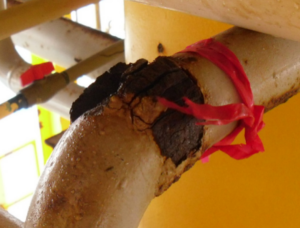
An increased number of gas release incidents have occurred in the Gulf of Mexico Region due to leaks from cracked welds, ring gaskets, flange gaskets, inlet nozzles, pipeline risers, suction headers, pressure safety valves (PSVs), and fuel gas lines. These gas release incidents involve deficiencies in Quality Assurance and Mechanical Integrity programs and are caused by corrosion of process piping...
Read More
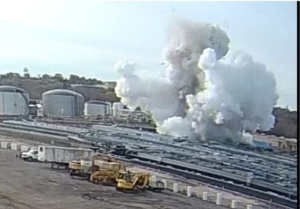
The National Transportation Safety Board determines that the probable cause of the explosion aboard the barge IB1940was the company’s incomplete procedures that did not incorporate the safety instructions included in the Facility Operations Manual regarding the electrical bonding of air movers to barges, resulting in an unbonded air mover being operated in a cargo tank with residual acetone, thereby...
Read More

This is a written explanation of how I was taught to perform Group Lockout and how to manage contractors working on-site under a Group Lockout. There are many things in this document that are NOT required by OSHA; however, they are in the program to ensure compliance with OSHA’s minimum expectations. We did it this way after many near misses over my career involving “group LOTO”...
Read More