












In workplaces that handle/store hazardous materials, there is a need for exhaust ventilation systems when these “Control Areas” exceed the maximum allowable quantities (MAQ) of these hazardous materials. I have used the International Mechanical Code (IMC) as my baseline code for 20+ years. We see this code’s basic requirements in a lot of OSHA standards and other engineering...
Read More
Respondent operated a facility to store and distribute pesticides, fertilizers, and industrial chemicals, including chlorine. At all times relevant to this CAFO, the facility produced, used or stored more than 10,000 pounds of chlorine and was subject to the requirements of CAA § 112(r)(7). The process was subject to Program 3 requirements because it was subject to the OSHA process safety management...
Read More
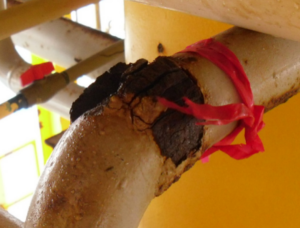
An increased number of gas release incidents have occurred in the Gulf of Mexico Region due to leaks from cracked welds, ring gaskets, flange gaskets, inlet nozzles, pipeline risers, suction headers, pressure safety valves (PSVs), and fuel gas lines. These gas release incidents involve deficiencies in Quality Assurance and Mechanical Integrity programs and are caused by corrosion of process piping...
Read More
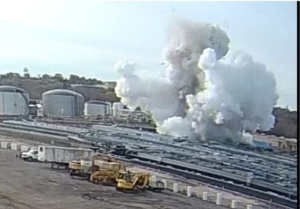
The National Transportation Safety Board determines that the probable cause of the explosion aboard the barge IB1940was the company’s incomplete procedures that did not incorporate the safety instructions included in the Facility Operations Manual regarding the electrical bonding of air movers to barges, resulting in an unbonded air mover being operated in a cargo tank with residual acetone, thereby...
Read More
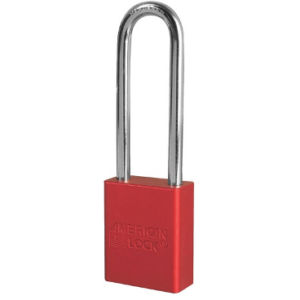
This is a written explanation of how I was taught to perform Group Lockout and how to manage contractors working on-site under a Group Lockout. There are many things in this document that are NOT required by OSHA; however, they are in the program to ensure compliance with OSHA’s minimum expectations. We did it this way after many near misses over my career involving “group LOTO”...
Read More
Respondent is the owner and operator of a facility where on October 13, 2019, there was an incident at the Facility that resulted in an accidental release. On April 4, 2020, the EPA requested, and Respondent provided, documentation and information concerning the Incident and Respondent’s compliance with Section 112(r) of the CAA and 40 C.F.R. Part 68. Corroded piping caused a leak of approximately...
Read More

It has been 36 years since the Bhopal tragedy killed thousands of people late one night when it was released from its process. I was recently surprised by a facility claiming that the incident was “overblown” and that “MIC is a vital chemical to commerce around the world”. I can’t disagree with the second statement, but I got myself in trouble pushing back...
Read More
Both OSHA and the International Fire Code use the Lethal-Dose 50 (LD50) to establish the toxicity of hazardous chemicals/materials and both use the metric milligram per kilogram of body weight in their assessments. Just so we all have an idea of how small a milligram is…
One (1) grain of sand weighs 1 mg
An average-sized ant will weigh around 2 mg
So we are talking about some REALLY toxic...
Read More
We have been using OSHA’s Hazard Categories from the Globally Harmonized System of Classification and Labelling of Chemicals (GHS) since 2012. I have written a lot about the flammable categories, but I tend to get a lot of questions about the Health Hazard Categories in my HAZCOM and HAZMAT training so I thought I would explain in real-world terms how toxic some chemicals are using...
Read More
Two of my major chemical incidents in my career occurred during “demo work” in a process that we were certain was gas-free/zero energy state. And of course, we were wrong! Highly toxic/flammable gases can travel long ways to places we never thought possible and do some serious damage to people and property when they get released. Here is an OSHA case where the workers...
Read More
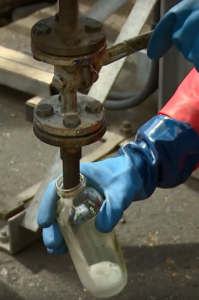
Just because we intend to handle minimal quantities of the HHC/EHS, the task of “catching a sample” from a covered process can, in fact be one of the more hazardous tasks our operators perform. Remember, Risk = Frequency X Severity, so operators catch many samples over their shift means this task is a high-frequency task. And as the picture below shows us, we need to ENSURE...
Read More
Respondent is a Gourmet Pasta Company that uses anhydrous ammonia in two refrigeration “processes,” as defined by 40 C.F.R. § 68.3, in two separate systems of pipes and vessels at the Facility (the “Processes”). On October 12, 2016, Respondent conducted a Process Hazard Analysis (“PHA”) for the Facility. On March 30, 2017, Respondent filed an update of its RMP with EPA. Respondent’s RMP categorizes...
Read More